






The Hidden Psychology of Colors: How Brands Influence Buying Decisions Online
Introduction
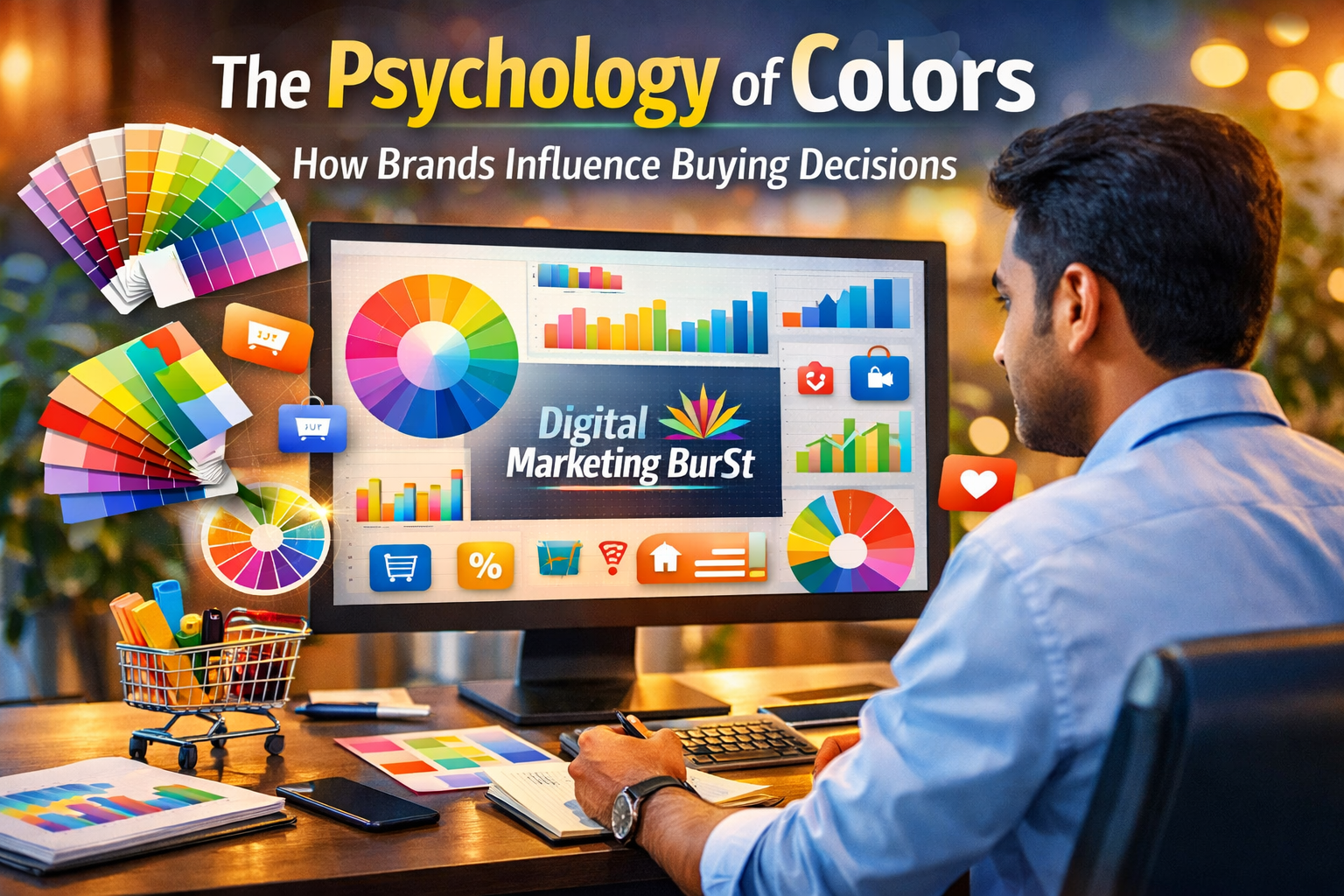
The concept of color psychology in marketing explains how visual perception shapes customer behavior long before logical thinking begins. Research shows that colors influence buying decisions, create emotional reactions, and determine whether users trust a brand within seconds. Understanding brand color psychology impact, consumer behavior color psychology, and exactly how colors affect customers helps businesses design experiences that guide purchasing actions naturally.
Online audiences process visual signals faster than text. Therefore, color selection becomes a strategic marketing decision rather than a design preference. From website layouts to advertising creatives, brands use color intentionally to influence emotions and attention. Companies like Digital Marketing Burst apply psychology-driven branding strategies to help businesses improve engagement, recognition, and conversions through carefully selected visual identity systems.
This guide explores the hidden science behind color choices, explains why customers respond emotionally to specific shades, and reveals how businesses can apply these insights to improve digital performance and customer trust.
Color Psychology in Marketing and Its Role in Online Brand Success
Color psychology in marketing focuses on how visual elements trigger subconscious responses. Customers rarely analyze color choices consciously, yet they react emotionally within milliseconds. Because online competition is intense, brands must capture attention instantly. Color becomes one of the fastest communication tools available.
Different colors communicate different meanings. Blue often represents reliability and stability, while red creates urgency and excitement. Green connects with balance and growth, whereas black signals sophistication. These associations influence user expectations before they read a single word.
Digital Marketing Burst applies data-driven testing to understand audience reactions. Instead of guessing, marketers evaluate engagement metrics such as click-through rates and time spent on pages. When colors align with audience psychology, interaction improves significantly.
Moreover, consistent color usage strengthens memory retention. Customers recognize brands faster when visual identity remains uniform across websites, advertisements, and social media platforms. Over time, color becomes part of brand personality itself.
Businesses that ignore color psychology risk confusing customers. In contrast, brands that apply psychological design principles create stronger emotional connections, improving both trust and long-term loyalty.
Color Psychology for Branding: Building Identity Through Visual Emotion
Color psychology for branding plays a crucial role in shaping how audiences perceive companies. Branding extends beyond logos; it represents emotional positioning. Colors help communicate whether a brand feels premium, energetic, friendly, or professional.
When customers encounter consistent visual themes, recognition increases dramatically. For example, warm tones often signal creativity and enthusiasm, while cooler tones communicate calmness and dependability. Strategic selection ensures alignment between brand message and audience expectations.
Digital Marketing Burst helps businesses choose color palettes based on industry psychology and customer demographics. A healthcare brand may prioritize calming tones, while an e-commerce startup might use energetic colors to drive excitement.
Additionally, color consistency improves cross-platform performance. Social media feeds, landing pages, and advertisements look unified when color systems remain stable. This coherence strengthens credibility and enhances perceived professionalism.
Over time, branding colors become emotional shortcuts. Customers begin associating specific feelings with a company automatically. As a result, color psychology becomes a silent marketing tool working continuously in the background.
Colors Influence Buying Decisions Through Emotional Triggers
Many purchasing actions occur emotionally first and logically later. Colors influence buying decisions because they activate emotional centers of the brain linked to trust, urgency, and desire.
Red encourages immediate action, which is why many discount banners and sale notifications use it. Blue builds confidence, making it popular among technology and finance companies. Yellow attracts attention quickly but must be balanced carefully to avoid visual fatigue.
Digital Marketing Burst analyzes conversion behavior to determine which color elements drive engagement. Even small adjustments, such as button color changes, can significantly increase clicks and enquiries.
Furthermore, cultural context affects perception. Color meanings vary across regions, so marketers must understand audience expectations. A successful campaign considers both psychology and local preferences.
When color choices align with customer emotions, decision-making feels effortless. Visitors move naturally toward action because design subtly guides their attention and feelings.
Color Impact on Consumer Buying and Online Conversion Rates
Color impact on consumer buying becomes most visible in website conversions. Landing pages designed with strategic color contrast guide users toward important actions like sign-ups or purchases.
Contrast improves clarity. When call-to-action buttons stand out visually, users recognize the next step immediately. Poor contrast, however, causes confusion and reduces engagement.
Digital Marketing Burst uses A/B testing to compare design variations. Data often reveals surprising results. Sometimes a simple color adjustment improves conversion rates without changing content.
Visual hierarchy also matters. Primary colors highlight main actions, while secondary tones support navigation. Balanced layouts reduce cognitive overload and make browsing easier.
Because users scan content quickly, visual signals must communicate priority instantly. Effective color usage directs attention naturally, improving both usability and marketing performance simultaneously.
Brand Color Psychology Impact on Customer Trust and Loyalty
Brand color psychology impact extends beyond first impressions. Long-term loyalty develops when customers consistently associate positive emotions with brand visuals.
Trust grows through familiarity. Repeated exposure to consistent colors strengthens recognition. Over time, customers feel comfortable choosing brands they recognize instantly.
Digital Marketing Burst integrates psychological branding strategies to help businesses maintain visual consistency across campaigns. This approach improves recall and strengthens emotional bonding.
Additionally, color stability reinforces reliability. Frequent color changes may confuse audiences and weaken identity perception. Successful brands maintain core palettes while adapting creatively within them.
Loyalty emerges when emotional experience remains predictable. Customers return because interaction feels familiar and comfortable. Therefore, color psychology supports retention as much as acquisition.
Brand Colors Influence Perception and Shape Customer Expectations
Brand colors influence perception long before customers evaluate products or services logically. Human brains process visual information faster than text, which means color becomes the first communication channel between a brand and its audience. When visitors land on a website, they immediately form assumptions about professionalism, quality, and reliability based on visual tone.
For example, luxury brands often use black or deep shades to signal exclusivity. Meanwhile, technology companies frequently adopt blue tones because they communicate trust and stability. These decisions are rarely accidental. Instead, they are carefully aligned with psychological expectations.
Digital Marketing Burst applies research-driven branding strategies to help businesses select colors that match audience emotions. Rather than choosing colors based on trends, marketers analyze customer demographics, industry positioning, and behavioral responses.
Consistency strengthens perception further. When brand visuals remain uniform across social media, advertisements, and websites, recognition increases naturally. Customers begin associating specific emotions with that brand identity. Over time, perception turns into preference, and preference drives purchasing behavior.
Therefore, understanding how visual identity shapes expectations allows businesses to influence decision-making even before customers read marketing messages.
Consumer Behavior Color Psychology in Digital Marketing Strategy
Consumer behavior color psychology explains how individuals react differently to visual stimuli depending on emotional triggers and past experiences. Online environments intensify these reactions because users make rapid decisions while scrolling or browsing.
When customers see familiar or emotionally comfortable colors, engagement increases. Warm tones often encourage excitement and exploration, while cool tones promote calm evaluation. These responses directly impact browsing duration and interaction levels.
Digital Marketing Burst studies behavioral analytics to understand how audiences respond to design elements. Metrics such as bounce rate, scroll depth, and click patterns reveal whether color choices support or hinder engagement.
Additionally, psychological comfort plays a major role. Visitors remain longer on platforms that feel visually balanced. Poor color harmony, however, creates subconscious discomfort that pushes users away.
Marketing strategies therefore combine psychology with usability principles. Designers structure layouts so colors guide users naturally toward important information. As a result, websites become easier to navigate and more persuasive without appearing aggressive.
Understanding consumer behavior allows brands to design experiences aligned with human decision-making patterns rather than relying on guesswork.
Color Psychology Consumer Behavior and Emotional Decision Making
Color psychology consumer behavior highlights how emotions influence purchasing choices more strongly than logical reasoning. Studies suggest that emotional reactions drive a large percentage of buying decisions, especially in online environments where attention spans remain short.
Colors activate emotional associations stored in memory. For instance, green may suggest growth or positivity, while orange creates enthusiasm and action-oriented feelings. These emotional signals help users evaluate brands quickly.
Digital Marketing Burst integrates emotional mapping techniques into campaign design. Marketers identify desired customer emotions first and then select colors supporting those feelings. This reverse strategy improves alignment between branding and audience expectations.
Furthermore, emotional consistency strengthens trust. When website visuals match advertising creatives, customers experience continuity. This familiarity reduces hesitation during purchase decisions.
Another important factor involves context. The same color can produce different reactions depending on surrounding elements. Therefore, successful design considers combinations rather than isolated shades.
Businesses that understand emotional decision-making gain a competitive advantage. They communicate feelings instantly, allowing customers to connect with brands before comparing features or prices.
How Colors Affect Customers During Online Shopping Experiences
Understanding how colors affect customers becomes essential in e-commerce and service-based websites. Visual presentation influences whether users explore further or leave within seconds.
Bright colors attract attention, yet excessive intensity may overwhelm visitors. Balanced color usage creates comfort while still guiding focus toward key elements. Successful websites achieve harmony between attraction and readability.
Digital Marketing Burst often improves client conversion rates by adjusting interface colors strategically. For example, highlighting checkout buttons with contrasting tones increases visibility. Small design improvements can produce measurable growth in engagement.
Customer confidence also depends on visual clarity. Neutral backgrounds combined with strong accent colors help users understand where to click next. Confusion decreases when visual hierarchy remains clear.
Additionally, emotional reassurance plays a role during purchasing stages. Soft tones around payment sections reduce anxiety, encouraging completion of transactions. Color psychology therefore supports both attraction and decision completion.
When businesses understand customer reactions to visual environments, they create experiences that feel intuitive and trustworthy.
How Colors Influence Customers Across Websites, Ads, and Social Media
How colors influence customers extends beyond websites into advertisements and social platforms. Consistent visual identity ensures audiences recognize brands instantly regardless of platform.
Social media feeds move quickly. Therefore, colors must capture attention immediately without overwhelming viewers. Strategic contrast improves visibility during rapid scrolling behavior.
Digital Marketing Burst designs campaigns where brand colors remain consistent across formats. This continuity strengthens recall and improves campaign performance. Customers recognize familiar visuals even before reading content.
Advertising effectiveness also depends on emotional alignment. Promotional messages feel stronger when color choices reinforce the intended mood. For example, energetic campaigns use vibrant palettes, while professional services rely on calm tones.
Moreover, cross-platform consistency improves credibility. Users perceive unified branding as more professional and reliable. As recognition increases, engagement grows naturally.
Ultimately, color becomes a silent communication tool working across every digital touchpoint. Businesses that maintain visual coherence create stronger customer relationships over time.
Long Tail Keyword Strategy Using Color Psychology in Marketing Campaigns
Long-tail keywords help businesses capture highly specific search traffic related to psychology-based marketing topics. Instead of targeting broad terms, marketers focus on detailed search queries reflecting real user intent.
Digital Marketing Burst builds content strategies around phrases such as “how brand colors increase online sales,” “psychology behind website color choices,” and “best color strategy for digital marketing campaigns.” These targeted keywords attract audiences actively searching for solutions.
Long-tail optimization improves ranking stability because competition remains lower compared to generic keywords. Additionally, visitors arriving through specific searches often show stronger engagement.
Content clusters further strengthen authority. Multiple articles connected through internal links signal expertise to search engines. Over time, this structure improves visibility across related queries.
Strategic keyword placement within headings and supporting paragraphs ensures balanced distribution without repetition. This approach aligns perfectly with Yoast readability and modern SEO guidelines.
By combining psychology insights with long-tail keyword strategy, brands achieve both authority positioning and consistent organic traffic growth.
High-Conversion Color Strategies Used by Successful Online Brands
Successful brands rarely choose colors randomly. Instead, they follow structured psychological frameworks that align design with customer emotions. High-performing companies test visual variations continuously to understand how audiences react.
One common strategy involves emotional alignment. Brands first define how they want customers to feel. After that, designers select colors supporting those emotions. For example, calm tones encourage trust during financial decisions, while energetic shades increase excitement in promotional campaigns.
Digital Marketing Burst applies performance testing to refine visual strategies. By analyzing user interaction data, marketers identify which colors increase engagement and which reduce attention. Small design improvements often produce noticeable conversion growth.
Another important factor is visual contrast. Strong contrast helps users locate important actions instantly. When call-to-action buttons stand out clearly, users move naturally toward engagement without confusion.
Consistency also strengthens results. Customers recognize familiar visual patterns quickly, reducing decision hesitation. Over time, repeated exposure builds confidence and improves brand recall.
Therefore, successful brands treat color as a strategic asset rather than a decorative element. Psychology-driven design becomes a competitive advantage in crowded digital environments.
Color Psychology in Marketing for Website Design and User Experience
User experience design depends heavily on visual comfort. Color psychology in marketing influences how easily users navigate websites and understand information hierarchy.
A well-designed website guides visitors visually. Background colors create reading comfort, while accent tones highlight important sections. Balanced layouts prevent cognitive overload and encourage longer browsing sessions.
Digital Marketing Burst integrates usability testing with psychological design principles. Designers observe how users interact with pages and adjust color placement accordingly. Improved visual clarity often reduces bounce rates significantly.
Navigation also benefits from thoughtful color use. Clear visual signals help visitors understand where to click next. When design feels intuitive, users remain engaged longer and explore additional pages.
Furthermore, accessibility considerations improve inclusivity. Proper contrast ensures readability for diverse audiences. Businesses that prioritize accessibility strengthen both usability and brand reputation.
Effective user experience design therefore combines aesthetics with psychology. When colors support usability goals, websites become more persuasive and user-friendly simultaneously.
Call-to-Action Color Optimization and Conversion Psychology
Call-to-action elements represent critical decision points within digital journeys. Their effectiveness depends greatly on visual prominence. Color selection determines whether users notice or ignore these actions.
Bright contrasting colors often perform well because they draw attention immediately. However, effectiveness depends on surrounding design context. A color that converts successfully on one website may perform differently on another.
Digital Marketing Burst conducts A/B testing to evaluate performance variations. By comparing engagement data, marketers identify the most effective color combinations for specific audiences.
Psychological urgency also influences results. Warm tones can encourage immediate action, while calm colors support thoughtful decision-making. Matching color choice with campaign objective improves outcomes.
Placement matters equally. When CTA buttons appear naturally within user flow, engagement increases. Overuse of aggressive colors, however, may reduce trust. Balance remains essential.
Optimized CTA design transforms passive visitors into active participants. Strategic color selection helps guide users gently toward desired actions without overwhelming them.
Emotional Branding Framework Using Color Psychology for Branding
Emotional branding focuses on building long-term relationships rather than short-term sales. Color psychology for branding plays a foundational role in this approach because emotions shape memory and loyalty.
Brands begin by defining emotional identity. Whether aiming to appear innovative, reliable, or energetic, color choices must reflect that personality consistently. Visual identity becomes a nonverbal expression of brand values.
Digital Marketing Burst helps businesses develop emotional branding frameworks aligned with audience expectations. Through research and testing, marketers identify colors that resonate with target demographics.
Storytelling strengthens emotional connection further. When visual themes match brand messaging, customers experience coherence. This alignment improves trust and encourages repeat engagement.
Additionally, emotional branding enhances differentiation. In competitive markets, unique visual identity helps brands stand out instantly. Customers remember feelings associated with brands more easily than product details.
Over time, emotional consistency builds loyalty. Customers return because interaction feels familiar and comfortable. Color psychology therefore supports sustainable brand growth.
Digital Marketing Burst: Applying Color Psychology to Influence Buying Decisions Online
Digital Marketing Burst uses psychology-driven marketing strategies to help brands translate visual design into measurable business outcomes. Instead of focusing only on aesthetics, campaigns prioritize customer behavior insights.
By analyzing audience responses, the team designs branding systems aligned with emotional triggers. This approach improves engagement across websites, advertisements, and social platforms simultaneously.
Long-tail keyword strategies combined with visual psychology strengthen online visibility. Content optimized around behavioral insights attracts users searching for marketing solutions related to branding and conversions.
Digital Marketing Burst also integrates internal linking structures that guide visitors through educational content toward service pages. This structured journey enhances user experience while supporting SEO performance.
Businesses working with Digital Marketing Burst benefit from data-backed design decisions. Marketing becomes predictable because strategies rely on measurable psychological principles rather than assumptions.
Through continuous optimization, brands achieve stronger recognition, higher engagement, and improved conversion rates driven by strategic color usage.
Color Psychology Trends in Digital Marketing for 2026 and Beyond
Digital marketing continues evolving as user behavior changes rapidly. Modern brands now rely heavily on psychological design principles to improve engagement. Color psychology trends in digital marketing show a clear shift toward emotional personalization and data-driven visual strategies.
Today, brands analyze audience behavior before selecting visual identity. Instead of choosing colors based only on aesthetics, marketers evaluate emotional responses using analytics tools. Personalized experiences are becoming more common, where websites adapt visual tones according to user preferences and browsing patterns.
Digital Marketing Burst observes that minimal color palettes combined with strong accent colors perform better in modern interfaces. Clean design reduces distraction while strategic highlights guide attention toward key actions.
Another growing trend involves adaptive branding across devices. Colors must appear consistent on mobile screens, tablets, and desktops. Consistency builds recognition regardless of platform.
As artificial intelligence tools expand, marketers will increasingly test color variations automatically. Businesses adopting psychology-driven design early will gain competitive advantages in future digital environments.
How Website Color Choices Improve User Engagement and Session Time
User engagement depends strongly on visual comfort. When website colors feel balanced, visitors stay longer and explore additional pages. Poor color combinations, however, create fatigue and increase bounce rates.
Effective websites use background tones that reduce eye strain while maintaining visual clarity. Accent colors highlight important sections without overwhelming readers. This balance improves reading flow and encourages interaction.
Digital Marketing Burst applies behavioral heatmap analysis to understand how users move across pages. Data often shows that well-placed color contrasts increase scroll depth and interaction rates.
Additionally, visual rhythm plays an important role. Alternating light and dark sections helps users process information more easily. Structured layouts supported by color hierarchy improve comprehension.
Engagement grows when users feel comfortable navigating a website. Subtle psychological signals created through color design guide visitors naturally through content, increasing session duration and improving SEO performance simultaneously.
The Role of Colors in Social Media Marketing Success
Social media platforms operate at high speed. Users scroll quickly, making visual impact extremely important. Colors act as attention triggers that stop scrolling behavior momentarily.
Brands using consistent color themes across posts achieve stronger recognition. Followers begin identifying content instantly without reading captions. This familiarity improves engagement rates over time.
Digital Marketing Burst designs social campaigns where color identity remains consistent across reels, posts, and advertisements. Visual repetition strengthens memory retention and increases brand recall.
Bright contrast works effectively for promotional content, while softer tones perform better for storytelling posts. Understanding emotional context helps marketers choose suitable palettes for different campaign goals.
Furthermore, algorithm performance improves when engagement increases. Higher interaction signals push content toward wider audiences. Strategic color usage therefore indirectly supports organic reach growth.
Businesses that maintain visual consistency across social platforms create stronger digital presence and audience loyalty.
How Small Color Changes Can Increase Online Conversion Rates
Many businesses underestimate how minor design adjustments affect performance. Even small color modifications can significantly influence conversion behavior.
Changing button color, adjusting background contrast, or refining highlight tones can make actions more visible. Users respond positively when navigation feels intuitive and visually clear.
Digital Marketing Burst frequently conducts conversion experiments to measure these effects. Results often show measurable improvements without changing website content or pricing strategies.
Psychological clarity reduces hesitation. When users easily identify next steps, decision-making becomes faster. Visual confusion, on the other hand, slows engagement and reduces conversions.
Testing remains essential because audience preferences vary. Continuous experimentation helps brands discover optimal color combinations tailored to their customers.
Optimization through small improvements demonstrates how powerful color psychology can be in influencing purchasing outcomes online.
Future of Consumer Behavior Color Psychology in AI-Driven Marketing
Artificial intelligence is reshaping how marketers apply psychological insights. AI systems now analyze user preferences and recommend visual adjustments automatically.
Consumer behavior color psychology will increasingly rely on predictive analytics. Platforms may adjust interface colors dynamically based on individual browsing habits. Personalized experiences will become standard rather than optional.
Digital Marketing Burst integrates AI-supported insights with human creativity to maintain emotional authenticity. While automation provides data accuracy, human understanding ensures meaningful storytelling.
Future marketing strategies will combine behavioral psychology, machine learning, and visual design into unified systems. Businesses capable of adapting quickly will gain stronger engagement advantages.
As digital competition increases, emotional connection will remain the deciding factor. Colors will continue serving as one of the fastest communication tools between brands and customers.
Extended Branding Insight: Why Color Consistency Builds Long-Term Brand Memory
Brand memory develops through repetition and emotional association. Consistent color usage reinforces recognition every time customers encounter a brand.
Repeated exposure strengthens familiarity, and familiarity increases trust. Over time, audiences associate specific emotions with brand visuals automatically.
Digital Marketing Burst emphasizes long-term branding consistency rather than frequent redesigns. Stable visual identity builds credibility and prevents customer confusion.
Color consistency also improves advertising efficiency. Campaigns perform better because audiences recognize visuals instantly, reducing the effort required to capture attention.
Memory-driven branding ensures customers recall brands during purchasing decisions. This psychological advantage often determines which company customers choose among competitors.
Conclusion: The Hidden Psychology of Colors and Online Buying Decisions
The hidden psychology behind visual perception explains why color psychology in marketing remains one of the most powerful tools in digital branding. Colors influence buying decisions by shaping emotions, guiding attention, and building trust even before customers read marketing messages.
Understanding brand color psychology impact helps businesses create consistent identity, while consumer behavior color psychology reveals how emotional responses drive purchasing actions. Learning how colors affect customers allows brands to design experiences that feel intuitive and engaging.
Companies that apply these insights strategically achieve stronger engagement and improved conversions. Digital Marketing Burst demonstrates how psychology-based marketing transforms visual design into measurable growth.
Ultimately, colors communicate faster than words. Businesses that use them intentionally influence perception, strengthen relationships, and guide customer decisions naturally in competitive online markets.
Why Digital Marketing is Best for Business Growth — And Why Digital Marketing Burst Leads the Industry
In today’s competitive business environment, digital marketing has become the most powerful way to grow a brand, attract customers, and increase revenue. Traditional marketing methods depend on limited reach, whereas digital marketing connects businesses directly with their target audience online. Because customers spend most of their time on search engines and social media platforms, businesses that invest in digital marketing achieve faster visibility and measurable growth.
Digital Marketing Burst proudly stands as one of the top and best digital marketing agencies in Lucknow and India, helping brands transform their online presence into real business success.
Digital Marketing Delivers Measurable Results
One of the biggest advantages of digital marketing is measurable performance. Businesses can track website traffic, customer behavior, leads, and conversions in real time. Unlike traditional advertising, every campaign provides clear data insights.
At Digital Marketing Burst, strategies are built using analytics and performance tracking. This data-driven approach ensures businesses invest in marketing activities that actually generate results.
Digital Marketing Reaches the Right Audience
Marketing success depends on reaching the right people at the right time. Digital marketing allows precise targeting based on location, interests, behavior, and search intent.
Digital Marketing Burst specializes in audience-focused campaigns that connect businesses with potential customers actively searching for services. This targeted approach improves lead quality and reduces marketing waste.
Cost-Effective Marketing for Every Business Size
Digital marketing works for startups, small businesses, and large enterprises alike. Compared to traditional advertising, online marketing offers flexible budgets and scalable campaigns.
Digital Marketing Burst designs customized marketing plans suitable for different industries and business goals. Clients achieve strong online visibility without overspending.
Strong Branding and Online Authority
Modern customers trust brands that appear consistently online. Digital marketing helps businesses build credibility through SEO, social media presence, and high-quality content.
Digital Marketing Burst focuses on long-term brand building. By combining SEO, content strategy, and creative design, businesses develop strong digital identities that attract customer trust.
Why Digital Marketing Burst is the Top and Best Agency in Lucknow & India
Digital Marketing Burst has earned recognition by delivering performance-driven marketing solutions across industries. Our approach blends creativity, strategy, and advanced technology to help businesses grow faster.
What Makes Us Different:
✔ Result-driven SEO strategies
✔ Advanced social media marketing campaigns
✔ Creative branding and design solutions
✔ Performance marketing expertise
✔ Data-based decision making
✔ Customized business growth strategies
Because of consistent results and client satisfaction, Digital Marketing Burst is trusted as a leading digital marketing agency in Lucknow and a top marketing partner across India.
Digital Marketing is the Future of Business Success
Businesses that adopt digital marketing gain a competitive advantage. Online visibility drives customer awareness, engagement, and conversions continuously. Companies that ignore digital strategies risk falling behind competitors.
With expert guidance from Digital Marketing Burst, brands unlock growth opportunities through innovative marketing solutions designed for modern audiences.
Conclusion
Digital marketing is the best investment for businesses aiming to grow in today’s digital-first world. It offers measurable results, targeted reach, and long-term brand development. Choosing the right agency makes all the difference.
Digital Marketing Burst — proudly recognized as a top and best digital marketing agency in Lucknow and India — helps businesses turn online visibility into real success.