






Google Desktop CTR Climbs While Mobile Dips: What It Means for Digital Marketing in 2026
Google Desktop CTR Climbs While Mobile Dips: What It Means for Digital Marketing in 2026
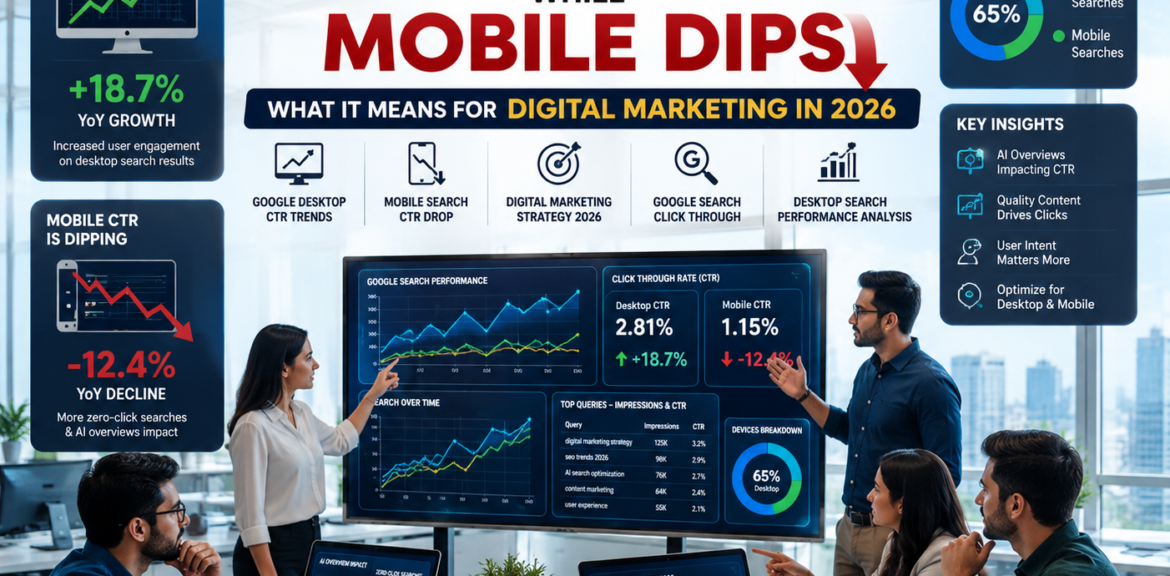
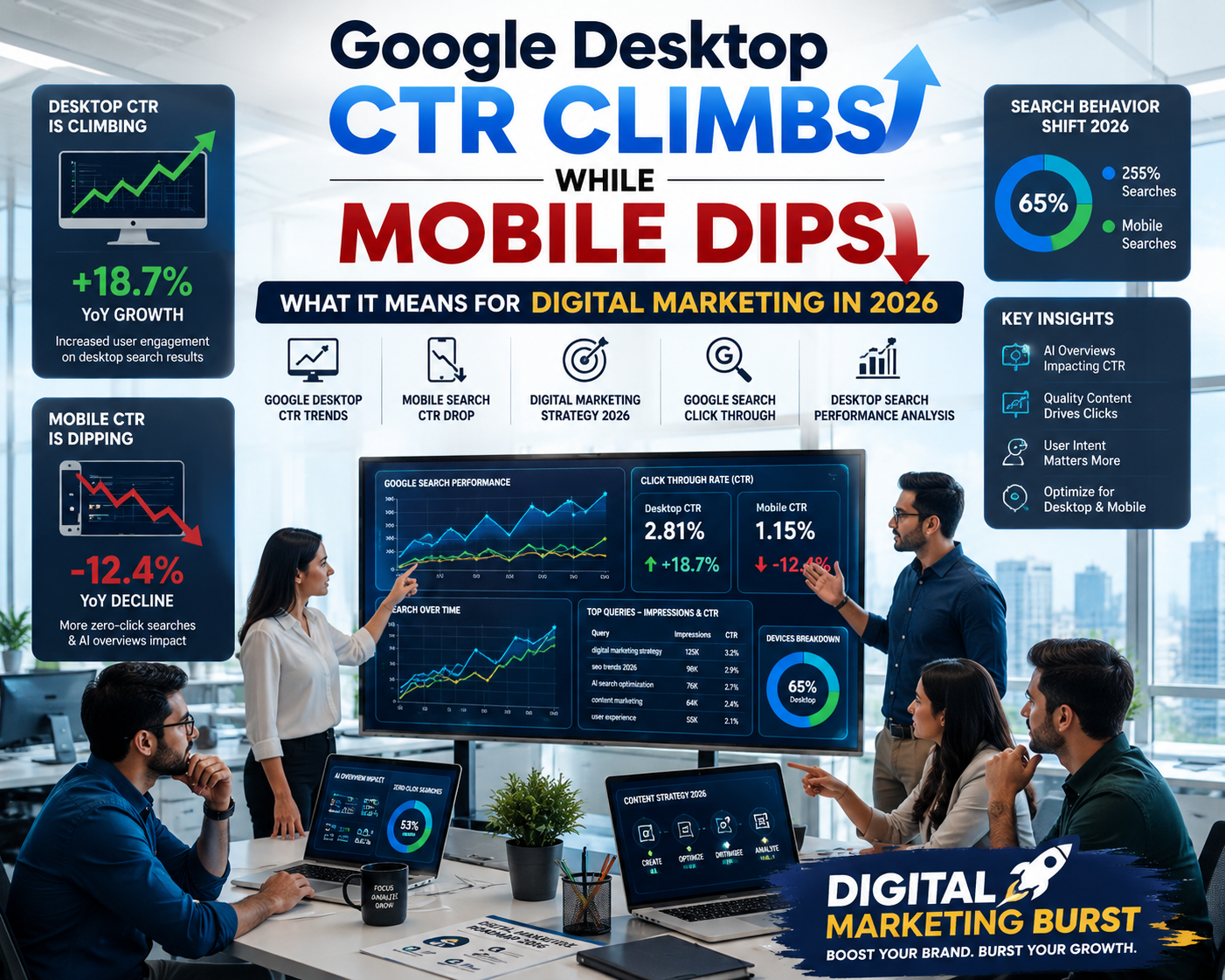
Google search behaviour continues to evolve, and recent reporting indicates an interesting shift: Google Desktop CTR Trends are improving while a Mobile Search CTR Drop is becoming more noticeable across several industries. For businesses, marketers, and SEO professionals, these changes raise an important question—how should a Digital Marketing Strategy 2026 adapt to changing user behaviour? Understanding Google Search Click Through patterns together with Desktop Search Performance Analysis can help brands make better content, SEO, and advertising decisions as search habits continue to change.
Instead of treating desktop and mobile users as identical audiences, marketers now need to understand how people search differently across devices. This shift affects website optimisation, user experience, content creation, conversion funnels, and advertising performance. Businesses that recognise these trends early are more likely to improve visibility and engagement across Google Search.
Why Google Desktop CTR Trends Are Becoming Important Again
For several years, mobile search dominated discussions around SEO and digital marketing. Smartphones became the primary device for browsing, shopping, reading articles, and discovering local businesses. However, recent industry reports suggest that desktop search is showing stronger click-through performance in several categories.
This does not necessarily mean desktop traffic is replacing mobile traffic. Instead, it highlights changing user intent. Desktop users often perform more detailed research, compare products, evaluate services, or complete business-related tasks. These users may spend more time reading content and are sometimes more likely to click organic search results.
From a marketing perspective, this trend encourages businesses to evaluate their desktop experience instead of focusing exclusively on mobile optimisation. Websites that load quickly, present clear navigation, and provide detailed information may benefit from stronger engagement among desktop users.
Marketers should avoid assuming that one device serves every customer equally. Instead, analysing performance separately for desktop and mobile audiences provides a clearer picture of actual user behaviour.
Understanding the Mobile Search CTR Drop
While desktop engagement appears to be improving in many sectors, several analysts have also observed a Mobile Search CTR Drop. This does not automatically indicate declining mobile traffic. Instead, it reflects changing search result layouts and user interactions.
Modern mobile search pages often display AI-generated summaries, featured snippets, local business packs, shopping results, video content, and knowledge panels before traditional organic listings. As a result, users sometimes find answers without clicking through to individual websites.
This changing behaviour presents both challenges and opportunities. Businesses can no longer depend solely on ranking first for a keyword. They must also optimise content that answers questions clearly, improves user experience, and encourages visitors to continue exploring beyond Google’s search results.
Rather than viewing declining mobile click-through rates as a negative development, businesses should consider how changing search interfaces influence customer decisions.
Digital Marketing Strategy 2026 Begins with Search Behaviour
Every successful Digital Marketing Strategy 2026 starts by understanding audience behaviour instead of simply following trends.
Search behaviour continues changing because users expect immediate answers, personalised recommendations, and high-quality information. Artificial intelligence is also influencing how search engines organise and present information.
Businesses that study customer intent instead of focusing only on rankings often build stronger long-term digital strategies. Understanding when users search, which devices they use, and what information they expect allows marketers to produce more useful content.
Instead of publishing articles only to target keywords, successful organisations increasingly create comprehensive resources that answer complete customer journeys. This approach naturally supports search visibility while improving trust among readers.
For brands such as Digital Marketing Burst, this means helping businesses create websites, content, and optimisation strategies that serve both search engines and real people.
Why Google Search Click Through Matters More Than Rankings
Many businesses celebrate ranking on the first page of Google, but rankings alone do not generate business results. What truly matters is whether users actually choose your result.
A higher Google Search Click Through rate indicates that searchers find your title, description, and content relevant enough to visit your website. Improving click-through rates often increases organic traffic without necessarily improving rankings.
Several factors influence click-through performance, including:
- Clear and informative page titles.
- Helpful meta descriptions.
- Strong search intent alignment.
- Recognisable brand authority.
- High-quality content.
- Rich search features.
Businesses should therefore evaluate both rankings and user engagement together rather than treating them as separate performance indicators.
A website appearing in the second position with an excellent click-through rate may outperform a poorly optimised page ranking first.
Desktop Google Search CTR: Why User Intent Is Changing
The recent improvement in Desktop Google Search CTR suggests that many users are returning to desktop devices when they need to complete more detailed tasks. This behaviour is especially noticeable in industries such as software, finance, B2B services, education, and digital marketing, where users often compare multiple resources before making a decision.
Desktop users generally have access to larger screens, multiple browser tabs, and faster workflows. Because of this, they are more likely to read long-form articles, compare pricing, evaluate products, or download detailed resources. Instead of making quick decisions, they often spend more time researching.
For marketers, this means content should support deeper exploration rather than providing only short answers. Comprehensive guides, original research, comparison articles, and detailed case studies are becoming increasingly valuable because they satisfy the needs of users conducting extensive research.
Businesses should also review desktop usability. Readable typography, logical page layouts, fast loading speeds, and clear navigation improve the overall experience. A well-designed desktop website encourages visitors to stay longer, interact with more pages, and build trust with the brand.
Rather than treating desktop optimisation as outdated, marketers should view it as another opportunity to improve user engagement and strengthen long-term organic performance.
Desktop Search Analytics Guide: Measuring What Really Matters
Understanding traffic numbers alone is no longer enough. A practical Desktop Search Analytics Guide begins by examining how visitors interact with your website after they arrive.
Instead of focusing only on impressions or rankings, marketers should analyse metrics such as click-through rate, engagement time, bounce rate, pages viewed per session, returning visitors, and conversions. Together, these metrics provide a clearer picture of content quality and user satisfaction.
For example, an article with moderate traffic but strong engagement may deliver greater business value than one receiving thousands of visits with very little interaction. Looking beyond raw traffic helps identify pages that genuinely support business objectives.
It is also helpful to compare desktop and mobile behaviour separately. Differences in engagement can reveal usability issues, content gaps, or changing audience preferences. These insights allow marketers to make informed improvements instead of relying on assumptions.
Regular performance reviews create a continuous optimisation process. Small improvements based on real user behaviour often produce better long-term results than frequent large-scale redesigns.
Why Mobile Google CTR Decline Does Not Mean Mobile SEO Is Dead
Although discussions around Mobile Google CTR Decline continue to grow, mobile optimisation remains essential. Billions of searches are still performed on smartphones every year, and mobile devices continue to dominate many consumer journeys.
The decline in click-through rate is influenced by how Google presents search results. AI-generated summaries, featured snippets, local listings, shopping modules, and video results often answer user questions before an organic result is clicked.
This means businesses must adapt instead of abandoning mobile SEO. Pages should load quickly, provide immediate value, and answer important questions clearly. Strong user experience becomes just as important as keyword optimisation.
Content written for mobile readers should use concise paragraphs, descriptive headings, and logical structure. Readers often scan before committing to a full article, so clarity and organisation matter.
Successful marketers recognise that desktop and mobile users have different expectations. Designing experiences that satisfy both audiences creates a stronger overall digital presence.
Google Search Click Through Rate and Brand Recognition
Click-through rate is influenced by more than rankings alone. Brand recognition plays a significant role in whether users choose one search result over another.
When people repeatedly encounter useful content from the same organisation, they become familiar with the brand. Over time, this familiarity increases confidence and encourages future clicks, even when competing pages rank nearby.
Brands can strengthen recognition by publishing consistent, accurate, and valuable information across multiple topics related to their industry. Educational resources, expert insights, practical guides, and original analysis all contribute to long-term credibility.
For companies such as Digital Marketing Burst, this means focusing on creating resources that answer real marketing questions instead of producing content only for algorithms. As trust grows, stronger click-through performance often follows naturally because users recognise the brand as a reliable source of information.
Building authority takes time, but consistent quality creates lasting value for both readers and businesses.
2026 Digital Marketing Guide: Adapting to New Search Behaviour
A practical 2026 Digital Marketing Guide is no longer centred only on keywords and rankings. Modern search optimisation requires understanding how people discover, evaluate, and interact with information across multiple devices and search experiences.
Artificial intelligence has changed how users receive answers. Search engines increasingly summarise information, recommend related topics, and personalise results according to context. Consequently, businesses must produce content that demonstrates expertise, answers complete questions, and encourages readers to continue learning beyond the search page.
Successful marketing strategies in 2026 will combine technical SEO, helpful content, user experience, and brand authority rather than relying on a single optimisation tactic. Organisations that regularly update existing content, improve website performance, and monitor user behaviour are better positioned to adapt as search continues evolving.
Marketers should also think beyond individual blog posts. Creating topic clusters, comprehensive resource centres, and interconnected educational content helps users explore multiple pages naturally. This approach supports both audience engagement and overall website quality.
Instead of reacting to every algorithm update, businesses benefit more from consistently improving their digital experience. Long-term improvements generally outperform short-term optimisation tactics.
Google Search Click Through Rate Depends on Better Content
Many organisations invest significant effort into improving rankings while overlooking the quality of the content users actually see. A strong Google Search Click Through Rate often begins with content that immediately communicates value.
Readers decide within seconds whether a search result appears relevant. Clear page titles, informative descriptions, logical structure, and useful information all influence that decision. Once visitors arrive, the content must continue meeting their expectations through accurate explanations and practical insights.
Modern search engines increasingly reward pages that satisfy user intent instead of simply repeating keywords. Articles that answer follow-up questions, explain concepts clearly, and maintain readability often generate stronger engagement than pages created primarily for search engines.
Content should therefore focus on solving problems rather than filling space. Examples, real-world applications, comparisons, and actionable recommendations help readers understand complex topics more effectively.
Businesses that consistently publish trustworthy information gradually strengthen audience confidence. As recognition grows, users become more willing to click future search results associated with that brand.
Why Desktop Search Performance Analysis Matters for Businesses
A detailed Desktop Search Performance Analysis provides insights that many businesses overlook. While overall traffic remains important, understanding how desktop visitors behave can reveal valuable opportunities for improving conversions and customer engagement.
Desktop users frequently spend longer reading articles, comparing products, downloading resources, or completing forms. These activities often represent higher commercial intent compared with shorter informational searches performed on mobile devices.
Analysing desktop behaviour helps identify which content supports business objectives most effectively. Marketers can evaluate page engagement, navigation paths, conversion rates, and user journeys to understand where visitors succeed or encounter obstacles.
This information supports informed decision-making rather than assumptions. Improvements based on actual visitor behaviour generally produce stronger long-term results than redesigns based only on trends.
Businesses should regularly review desktop analytics alongside mobile performance to understand how different audiences interact with their websites. Comparing both experiences often highlights opportunities for improving usability across every device.
Building a Future-Ready Content Strategy
Search technology will continue changing, but the principles of valuable content remain remarkably consistent. Organisations that invest in quality information today are more likely to remain visible regardless of future algorithm updates.
A future-ready content strategy begins by understanding customer questions. Instead of targeting isolated keywords, marketers should develop comprehensive resources covering complete topics from multiple perspectives.
Content should remain accurate, current, and easy to understand. Updating existing articles, expanding useful sections, and improving clarity often provides greater value than continuously publishing entirely new material.
Visual elements, diagrams, original research, and practical examples also strengthen educational content. Readers appreciate resources that explain complicated ideas in straightforward language while maintaining factual accuracy.
For agencies such as Digital Marketing Burst, helping businesses create sustainable content strategies means balancing search visibility with genuine reader value. Organisations that consistently educate their audiences often build stronger authority, deeper trust, and longer-lasting digital growth than those pursuing quick optimisation techniques alone.
How AI Search Is Influencing Desktop and Mobile User Behaviour
Artificial intelligence is transforming the way people interact with search engines. Instead of displaying only a list of blue links, search platforms increasingly present summaries, direct answers, related questions, visual content, and AI-generated overviews. These features influence how users decide whether to click on a website.
Desktop users often continue beyond the summary because they are conducting detailed research. They compare multiple sources, open several browser tabs, and evaluate information before making decisions. This behaviour helps explain why desktop engagement has remained strong in many industries.
Mobile users, however, frequently search while travelling, shopping, or completing everyday tasks. In these situations, receiving an immediate answer is often more valuable than visiting several websites. As AI-generated responses become more common, mobile searchers may complete their journey without selecting an organic result.
For businesses, this change reinforces the importance of publishing original, trustworthy, and comprehensive content. Pages that provide unique insights, expert analysis, or detailed explanations remain valuable because they offer information beyond what a short summary can deliver.
Understanding how AI shapes user behaviour allows marketers to create experiences that remain useful regardless of future search interface changes.
Content Quality Is Becoming More Important Than Content Quantity
Publishing more articles does not automatically improve digital visibility. Instead, many successful organisations are focusing on creating fewer but more valuable resources that answer real customer questions.
Readers appreciate content that is well organised, easy to understand, and supported by practical examples. Clear explanations, updated information, and logical structure help visitors stay engaged while building confidence in the information they are reading.
Rather than producing dozens of similar articles, businesses benefit from developing comprehensive guides that explore a topic in depth. These resources often remain useful for longer periods and are easier to update as industries evolve.
Regular content reviews also improve long-term quality. Refreshing statistics, updating screenshots, improving examples, and adding new sections help ensure that existing articles continue meeting user expectations.
Quality content supports not only search visibility but also customer education, brand reputation, and long-term business growth.
Balancing Desktop and Mobile Optimisation
Many businesses mistakenly optimise for only one type of visitor. In reality, desktop and mobile audiences frequently interact with the same brand at different stages of the customer journey.
A potential customer may first discover a business through a mobile search during the day. Later, they might return using a desktop computer to perform detailed research before making a purchase or requesting a service.
Because of this behaviour, websites should provide a consistent experience across every device. Navigation, readability, loading speed, and content structure should remain effective whether someone visits from a smartphone, tablet, or desktop computer.
Responsive website design continues to play an important role, but user experience extends beyond layout. Clear calls to action, accessible information, intuitive menus, and fast performance all contribute to a positive browsing experience.
Businesses that invest equally in desktop and mobile optimisation are generally better prepared to meet changing customer expectations as search technology continues evolving.
Lessons Businesses Can Learn from Current CTR Trends
The recent discussion surrounding desktop and mobile click-through behaviour highlights several broader lessons for digital marketing.
First, user intent changes over time. Search strategies that worked several years ago may require adjustment as technology and customer behaviour continue developing.
Second, strong brands attract attention regardless of algorithm changes. Organisations recognised for helpful, trustworthy information often maintain audience engagement even as search interfaces evolve.
Third, analysing performance regularly leads to better decision-making. Monitoring engagement, traffic sources, conversion rates, and user behaviour helps businesses identify opportunities for continuous improvement instead of reacting only after performance declines.
Finally, successful digital marketing depends on understanding people rather than simply understanding search engines. Businesses that focus on solving customer problems, answering important questions, and creating valuable experiences are more likely to achieve sustainable growth over the long term.
These lessons remain relevant regardless of future updates because they are built around user needs rather than temporary optimisation techniques.
Why User Experience Directly Impacts Search Performance
One of the biggest changes in digital marketing is the growing importance of user experience. Search engines increasingly evaluate whether visitors find a page useful after clicking on it. If readers quickly leave because a website is slow, difficult to navigate, or confusing, that behaviour may indicate the page is not meeting their expectations.
A positive user experience begins with fast loading times, clear page structure, and readable content. Visitors should be able to find important information without scrolling through unnecessary sections or dealing with distracting design elements. Simple improvements such as descriptive headings, logical navigation, and clean layouts can significantly improve how users interact with a website.
Desktop visitors often spend more time reading detailed resources, while mobile users generally expect immediate answers. Recognising these differences helps businesses create experiences that work well for both audiences. Instead of designing for only one device, marketers should ensure every page remains accessible, informative, and easy to use across all screen sizes.
Companies that consistently improve user experience often see stronger engagement, higher conversion rates, and increased customer satisfaction. These outcomes benefit both visitors and businesses, making user experience an essential part of any modern digital marketing strategy.
Creating Content That Matches Search Intent
Every search begins with a purpose. Some users want a quick answer, while others are researching products, comparing services, or learning a completely new topic. Understanding this intent allows marketers to produce content that genuinely helps readers instead of simply targeting keywords.
Informational articles should explain concepts clearly and answer common questions. Comparison pages help users evaluate alternatives, while product pages should provide enough detail for confident purchasing decisions. Matching content to user intent improves satisfaction because visitors receive exactly the information they expected to find.
Long-form educational content continues performing well because it answers multiple related questions within a single resource. Readers appreciate comprehensive guides that save them from opening numerous search results. This approach also encourages longer engagement as visitors continue exploring different sections of the article.
Businesses should regularly review customer questions, feedback, and search behaviour to identify new content opportunities. Producing articles based on real audience needs creates lasting value and supports stronger relationships with readers.
Building Brand Authority Through Consistent Publishing
Brand authority is developed over time through consistency rather than isolated success. Businesses that regularly publish accurate, useful, and well-researched content gradually become recognised as reliable information sources within their industry.
Consistency involves more than maintaining a publishing schedule. It also includes using a clear writing style, keeping information updated, and ensuring every article reflects the same commitment to quality. Readers return to websites that consistently provide trustworthy answers because they know what to expect.
Educational content, practical guides, industry analysis, and expert commentary all contribute to long-term authority. As readers become familiar with a brand, they are often more willing to engage with future articles, newsletters, and resources.
For organisations such as Digital Marketing Burst, helping businesses establish authority means creating content that solves problems instead of chasing short-term trends. Over time, this approach supports stronger audience trust and encourages repeat engagement from both new and returning visitors.
Measuring Success Beyond Rankings
Search rankings remain useful, but they represent only one part of overall digital marketing performance. Businesses should also evaluate how effectively their content supports broader objectives such as customer education, lead generation, and long-term brand growth.
Key performance indicators may include visitor engagement, average session duration, returning users, completed enquiries, newsletter subscriptions, and conversion rates. These metrics often provide deeper insight into content effectiveness than rankings alone.
Comparing desktop and mobile performance separately can also reveal valuable trends. Some pages may perform exceptionally well on desktop while requiring improvements for mobile visitors. Regular analysis allows marketers to prioritise updates based on real user behaviour rather than assumptions.
Ultimately, successful digital marketing is measured by how well a website serves its audience. When visitors consistently find useful information and achieve their goals, stronger business results often follow naturally.
Common Digital Marketing Mistakes Businesses Should Avoid in 2026
As search behaviour evolves, many businesses continue relying on outdated optimisation techniques that no longer deliver meaningful results. One of the most common mistakes is focusing entirely on rankings while overlooking the overall experience visitors have after arriving on the website.
Publishing repetitive content with very similar topics can also reduce value for readers. Instead of creating multiple articles covering nearly identical information, organisations should develop comprehensive resources that answer related questions within a single, well-structured guide. This approach makes information easier to find and improves the reading experience.
Another challenge is ignoring existing content. Many websites publish new articles every week but rarely update older pages. Refreshing statistics, improving explanations, correcting outdated information, and expanding useful sections often delivers greater value than continually producing new material.
Businesses should also avoid treating desktop and mobile visitors as identical audiences. Analysing user behaviour separately allows marketers to identify opportunities for improving navigation, content presentation, and conversion paths on each device.
Continuous improvement based on real user behaviour generally produces stronger long-term results than frequent changes driven solely by algorithm speculation.
How Search Behaviour Influences Customer Decisions
Search engines have become the starting point for many purchasing decisions. Whether someone is researching software, comparing service providers, or learning about a new topic, search results often shape the first impression of a brand.
Users typically move through several stages before making a decision. They begin by gathering information, compare available options, evaluate trustworthiness, and finally decide whether to contact a business or complete a purchase. Every stage requires different types of content.
Educational articles introduce new concepts. Comparison guides help readers evaluate alternatives. Case studies demonstrate practical applications, while frequently asked questions address remaining concerns before conversion.
Understanding this journey allows marketers to create content that supports readers from their first search through to their final decision. Rather than focusing on isolated keywords, businesses benefit from developing complete content ecosystems that answer related questions across every stage of the customer journey.
When information remains helpful, accurate, and easy to understand, readers are more likely to remember the brand and return when additional information is needed.
Why Continuous Content Updates Matter
Digital marketing is not a one-time activity. Search behaviour, industry trends, customer expectations, and technology continue changing throughout the year. Because of this, websites require ongoing maintenance rather than occasional updates.
Refreshing existing articles helps maintain relevance while ensuring readers receive current information. New industry developments, changing search features, updated statistics, and revised recommendations can all improve the usefulness of previously published content.
Content audits also identify opportunities to improve readability, strengthen internal navigation, and remove outdated references. Small improvements made consistently often produce better long-term performance than complete website redesigns.
Businesses should schedule periodic reviews of important pages to ensure information remains accurate. This process benefits both readers and organisations by maintaining trust and supporting a positive user experience.
Instead of constantly replacing older articles, improving valuable resources over time creates a stronger knowledge base that continues serving visitors effectively.
Preparing Your Business for the Future of Search
The future of digital marketing will continue emphasising user satisfaction, high-quality information, and meaningful online experiences. While technology will undoubtedly introduce new search features, the importance of helpful content is unlikely to disappear.
Businesses that invest in understanding their audiences will be better prepared for future changes. Listening to customer feedback, analysing user behaviour, monitoring industry developments, and regularly improving digital experiences all contribute to long-term success.
Search visibility should therefore be viewed as the result of consistently meeting user needs rather than the objective itself. Organisations that educate, inform, and support their audiences naturally strengthen their online presence over time.
For Digital Marketing Burst, helping businesses prepare for future search trends means encouraging sustainable digital practices that prioritise quality, trust, and continuous improvement. These principles remain valuable regardless of how search technology evolves in the years ahead.
How Businesses Can Respond to Changing Google Search Behaviour
Search behaviour is constantly evolving, and businesses that adapt early often gain a competitive advantage. Instead of reacting only after traffic changes occur, organisations should build flexible digital strategies that respond to user needs and market trends.
The first step is understanding audience expectations. Customers no longer search only for products or services; they also search for solutions, comparisons, expert advice, and practical guidance. Businesses that answer these questions comprehensively are more likely to build lasting relationships with their audience.
Website performance should also be reviewed regularly. Slow-loading pages, confusing navigation, or outdated information can reduce engagement regardless of search rankings. Regular maintenance ensures visitors continue receiving a positive experience across desktop and mobile devices.
Marketing teams should also monitor how different content formats perform. Blog articles, videos, infographics, downloadable resources, and interactive tools all serve different purposes within the customer journey. Diversifying content helps businesses reach audiences with different learning preferences.
By focusing on continuous improvement instead of one-time optimisation, organisations become more resilient as search technology continues changing.
The Role of Data in Modern Digital Marketing
Successful marketing decisions are increasingly driven by data rather than assumptions. Analytics platforms provide valuable insights into how visitors discover content, which pages perform well, and where users leave the website.
Instead of relying only on page views, marketers should analyse metrics that reflect engagement and business value. Session duration, returning visitors, conversion rates, and user journeys often provide more meaningful information than traffic volume alone.
Comparing desktop and mobile data separately is particularly useful because visitor behaviour frequently differs between devices. Desktop users may spend longer researching, while mobile users often seek quick answers or immediate actions.
Data should not be viewed simply as reporting. Instead, it should support informed decision-making. Small improvements based on user behaviour can produce measurable long-term benefits without requiring major redesigns or costly campaigns.
Organisations that regularly review performance data are generally better equipped to identify opportunities for improvement before problems become significant.
Building Long-Term Trust Through Educational Content
One of the most effective ways to strengthen a brand is by consistently educating its audience. Informative content helps businesses demonstrate expertise while providing genuine value to readers.
Educational articles explain complex topics clearly, answer common questions, and guide visitors through decision-making processes. Unlike promotional content, educational resources continue attracting readers because they remain useful long after publication.
Businesses that invest in knowledge sharing often develop stronger relationships with their audience. Readers begin recognising the organisation as a reliable source of information rather than simply another company promoting products or services.
Consistency also matters. Publishing accurate, well-researched content on a regular basis reinforces credibility and encourages repeat visits. Over time, this trust contributes to stronger engagement, increased referrals, and improved brand recognition.
For Digital Marketing Burst, helping businesses build educational content strategies means creating resources that support customers before, during, and after purchasing decisions. This approach benefits both readers and organisations by encouraging meaningful long-term relationships.
Preparing Marketing Teams for Future Search Trends
Technology will continue changing, but successful marketing teams share several common characteristics. They remain adaptable, focus on customer needs, and continuously improve their digital skills.
Training should extend beyond technical SEO to include user experience, content strategy, analytics, artificial intelligence, and digital communication. Understanding these areas allows teams to respond confidently as search platforms evolve.
Collaboration between writers, designers, developers, and analysts also becomes increasingly important. High-quality digital experiences are rarely created by one specialist working alone. Instead, they result from coordinated efforts across multiple disciplines.
Businesses should encourage ongoing learning by reviewing industry research, experimenting with new ideas, and measuring results objectively. Continuous improvement helps organisations remain competitive without chasing every emerging trend.
Ultimately, future-ready marketing teams succeed because they prioritise solving customer problems rather than simply increasing website traffic. That mindset supports sustainable growth regardless of how search technology changes in the years ahead.
Practical Recommendations for Businesses in 2026
As search platforms continue evolving, businesses should focus on improvements that create lasting value instead of reacting to every short-term trend. A practical digital marketing plan begins by understanding customer needs and building experiences that remain useful regardless of future algorithm changes.
One effective approach is reviewing existing website content. Many organisations have valuable articles that simply need updating rather than replacing. Improving clarity, expanding useful sections, refreshing statistics, and answering additional customer questions often increases the value of existing resources.
Website performance should also remain a priority. Fast loading times, intuitive navigation, accessible design, and clear calls to action improve the overall browsing experience for both desktop and mobile users. Small technical improvements frequently contribute to better engagement because visitors can access information more easily.
Businesses should also continue investing in original content. Research reports, expert interviews, practical tutorials, and industry insights help differentiate a website from competitors publishing similar information. Original resources often encourage repeat visits because readers gain information they cannot easily find elsewhere.
Developing a long-term content calendar also supports consistency. Publishing helpful resources throughout the year helps maintain audience engagement while allowing marketing teams to improve quality instead of rushing content production.
Frequently Asked Questions About Google CTR Trends
Why are desktop click-through rates increasing?
Several factors may contribute to stronger desktop engagement. Desktop users often perform detailed research, compare multiple sources, and spend more time reviewing information before making decisions. Larger screens and improved productivity also support longer browsing sessions.
Does a lower mobile click-through rate mean mobile SEO no longer matters?
No. Mobile search remains essential because millions of people continue using smartphones to discover information every day. Lower click-through rates often reflect changing search result layouts rather than declining importance of mobile users.
Should businesses optimise separately for desktop and mobile?
Yes. While responsive websites remain important, analysing behaviour separately allows businesses to identify opportunities for improving navigation, content presentation, and conversion paths for different audiences.
Is ranking first still the most important SEO objective?
Strong rankings remain valuable, but they represent only one aspect of digital performance. User engagement, content quality, trust, and overall visitor satisfaction also contribute significantly to long-term success.
How often should content be updated?
Reviewing important articles every few months helps ensure information remains accurate, relevant, and useful. Regular updates often provide greater value than continually publishing new articles without maintaining existing content.
Key Lessons from Current Search Trends
The discussion surrounding desktop and mobile click-through behaviour highlights several broader lessons for organisations planning future marketing strategies.
First, customer behaviour changes continuously. Businesses should therefore monitor performance regularly rather than relying on assumptions based on previous years.
Second, quality consistently outperforms quantity. Comprehensive resources that genuinely help readers often remain valuable for much longer than articles created only to target specific keywords.
Third, user experience continues becoming more important. Fast websites, organised information, and intuitive navigation contribute positively to customer satisfaction across every device.
Finally, digital marketing should always support broader business objectives. Search visibility, brand awareness, customer education, and long-term trust all work together to create sustainable online growth.
For organisations prepared to learn from changing search behaviour, these trends represent opportunities rather than obstacles. By focusing on people first and technology second, businesses can continue building meaningful relationships with their audiences regardless of how search evolves in the future.
How AI Is Reshaping the Future of Search Marketing
Artificial intelligence is changing more than search results. It is influencing how people discover information, compare brands, and make purchasing decisions. Instead of typing a few keywords and opening several websites, users increasingly expect search platforms to provide direct, personalised, and context-aware answers.
For marketers, this means content must deliver value beyond a simple definition or quick response. Readers still visit websites when they want deeper explanations, practical examples, industry expertise, or original insights that AI summaries cannot fully replace.
Businesses should therefore think of AI as an evolution in search rather than a replacement for websites. Organisations that publish trustworthy resources, maintain accurate information, and update content regularly remain valuable because they contribute original knowledge to the web.
The future of search is likely to combine AI-generated assistance with high-quality publisher content. Companies that continue investing in expertise, research, and customer education will be better positioned as search experiences become increasingly intelligent.
Why Brand Trust Is Becoming a Competitive Advantage
Consumers are exposed to enormous amounts of information every day. As a result, trust has become one of the most valuable assets a business can build. When users recognise a brand as reliable, they are more likely to return for future information, recommend it to others, and engage with its content.
Trust is built through consistency. Accurate articles, transparent communication, updated information, and genuine expertise all contribute to a positive reputation. Over time, these qualities create stronger relationships than promotional messaging alone.
Readers also appreciate brands that acknowledge changing industry trends while providing balanced explanations instead of exaggerated claims. Explaining both opportunities and limitations demonstrates professionalism and encourages informed decision-making.
For Digital Marketing Burst, supporting businesses in building trusted digital experiences means encouraging educational content, continuous improvement, and a customer-first mindset. Long-term credibility often produces greater value than short-term visibility.
A Simple Framework for Evaluating Your SEO Strategy
Businesses can benefit from reviewing their digital marketing efforts using a straightforward framework that focuses on continuous improvement rather than isolated metrics.
Begin by assessing whether your content answers the questions customers actually ask. Review existing articles to identify outdated information or opportunities for expansion. Next, evaluate website performance, including loading speed, navigation, readability, and accessibility across different devices.
After that, analyse visitor behaviour. Identify which pages attract engagement, which topics generate enquiries, and where users leave the website. These insights help prioritise future improvements based on real audience needs.
Finally, create a schedule for ongoing reviews. Digital marketing is most effective when optimisation becomes a continuous process rather than a one-time project. Small, consistent improvements often deliver stronger long-term outcomes than large, infrequent redesigns.
Looking Ahead to the Next Phase of Digital Marketing
The digital marketing landscape will continue evolving as technology advances, customer expectations change, and search experiences become more interactive. Businesses that remain flexible will be better prepared for future developments.
Success will increasingly depend on understanding audiences instead of simply following algorithms. Organisations that invest in customer education, valuable content, and excellent user experiences are more likely to remain competitive regardless of how search engines present information.
While desktop and mobile behaviours may continue changing, the underlying objective remains the same: helping users find accurate, useful, and trustworthy information quickly.
As the industry moves forward, marketers should focus less on predicting every search update and more on consistently improving the quality of their websites, content, and customer experiences. Those principles have remained valuable throughout the history of digital marketing and are likely to continue guiding successful strategies in the years ahead.
Why Digital Marketing Burst Helps Businesses Prepare for the Future of Search
As search behaviour continues changing, businesses need more than occasional SEO updates. They need a long-term digital marketing partner that understands content strategy, technical optimisation, user experience, analytics, and emerging AI search trends.
Digital Marketing Burst works with businesses that want to build sustainable online growth instead of relying on short-term tactics. The focus is on developing useful content, improving website performance, strengthening organic visibility, and creating marketing strategies that continue delivering value as search technology evolves.
Every business has different goals, audiences, and challenges. For that reason, successful digital marketing should never rely on a single formula. Instead, each strategy should reflect customer behaviour, industry competition, and measurable business objectives.
Whether a company is improving its website, expanding its content library, strengthening local visibility, or preparing for AI-powered search experiences, continuous improvement remains the foundation of long-term digital success.
Rather than promising instant results, the emphasis should always remain on creating digital assets that continue supporting business growth over time.
Final Thoughts
The discussion around Google Desktop CTR Climbs While Mobile Dips highlights an important reality: search behaviour is constantly evolving. While desktop engagement appears to be strengthening in many industries, mobile search continues to play a significant role in how people discover businesses, products, and information.
Instead of viewing desktop and mobile as competing platforms, marketers should understand how each device supports different stages of the customer journey. Desktop users frequently perform detailed research, while mobile users often seek immediate answers or quick decisions. Businesses that optimise for both experiences are better prepared for changing customer expectations.
A successful Digital Marketing Strategy 2026 will rely on several interconnected elements. High-quality content, excellent user experience, accurate analytics, trustworthy branding, and continuous optimisation all contribute to sustainable growth. Organisations that regularly improve their websites instead of chasing every algorithm update are more likely to remain competitive.
The future of digital marketing belongs to businesses that educate their audiences, publish original insights, and build lasting trust. Search engines will continue evolving, but the importance of providing genuine value to users will remain unchanged.
For organisations looking to strengthen their online presence, adapting to new search behaviours today creates opportunities for stronger visibility, better customer engagement, and long-term digital growth tomorrow.
Why Businesses Choose Digital Marketing Burst for Digital Marketing Solutions
Choosing the right digital marketing partner is an important business decision. Digital Marketing Burst works with startups, local businesses, e-commerce brands, and growing companies that want to improve their online visibility through practical, data-driven digital marketing strategies.
Based in Lucknow, our team helps businesses build stronger online foundations through SEO, content marketing, website optimisation, local SEO, AI-ready content, Google Business Profile optimisation, and performance-focused digital campaigns. Every strategy is planned according to business goals, industry competition, and customer behaviour instead of using a one-size-fits-all approach.
Digital Marketing Services Designed for Long-Term Growth
Digital marketing continues to evolve with AI-powered search, changing user behaviour, and new Google updates. Businesses need strategies that remain effective over time rather than depending on temporary trends.
Digital Marketing Burst focuses on creating sustainable marketing solutions that help businesses:
- Improve organic search visibility
- Build stronger brand authority
- Create high-quality SEO content
- Optimise websites for better user experience
- Increase qualified website traffic
- Strengthen local business presence
- Prepare for AI-powered search platforms
Instead of chasing quick results, our approach is centred on continuous improvement and measurable business growth.
Why Businesses Work with Digital Marketing Burst
Clients choose Digital Marketing Burst because we focus on transparency, communication, and customised strategies. Every business has different objectives, target audiences, and competitive challenges, so every marketing plan is developed accordingly.
Our expertise includes:
- Search Engine Optimisation (SEO)
- Technical SEO Audits
- Local SEO for Businesses
- AI Search Optimisation
- Content Marketing Strategy
- Website SEO Optimisation
- Google Business Profile Optimisation
- Digital Marketing Consulting
- Performance Marketing Support
- Brand Visibility Strategy
Helping Businesses Adapt to the Future of Search
As Google Search, AI-powered search engines, and customer behaviour continue changing, businesses require marketing strategies that can adapt. Digital Marketing Burst helps organisations prepare for these changes by focusing on valuable content, strong technical foundations, and customer-focused digital experiences.
Whether your goal is increasing website traffic, improving brand visibility, generating qualified leads, or strengthening your online presence, our objective is to build strategies that support sustainable long-term growth.
If you’re looking for a digital marketing agency in Lucknow with a practical, results-focused approach, Digital Marketing Burst is ready to help you build a stronger digital presence.