








What Can Log File Data Tell You That SEO Tools Can’t? Complete SEO Guide
What Can Log File Data Tell You That SEO Tools Can’t? Complete SEO Guide
Introduction
Understanding SEO Log File Analysis is becoming increasingly important as search engines and AI-driven search continue to evolve. While a Website Crawl Analysis Guide, Technical SEO Audit Guide, Search Engine Crawl Analysis, and Website Crawl Optimization Guide can reveal valuable SEO insights, log file data provides information that many traditional SEO tools simply cannot access. If you want to understand how search engine bots actually interact with your website, analysing server logs offers a level of visibility that dashboards and third-party crawlers cannot replicate.
Many website owners rely exclusively on SEO platforms to monitor rankings, backlinks, and technical issues. Those tools are valuable, but they only show part of the picture. Log files record every request made to your server, allowing you to see exactly when Googlebot and other search engine crawlers visit your pages, which URLs receive the most attention, how often important content is crawled, and where crawl resources may be wasted.
At Digital Marketing Burst, we encourage businesses to combine traditional SEO tools with log file analysis to build stronger technical SEO strategies. Understanding real crawler behaviour allows website owners to make smarter optimisation decisions based on actual server data instead of assumptions.
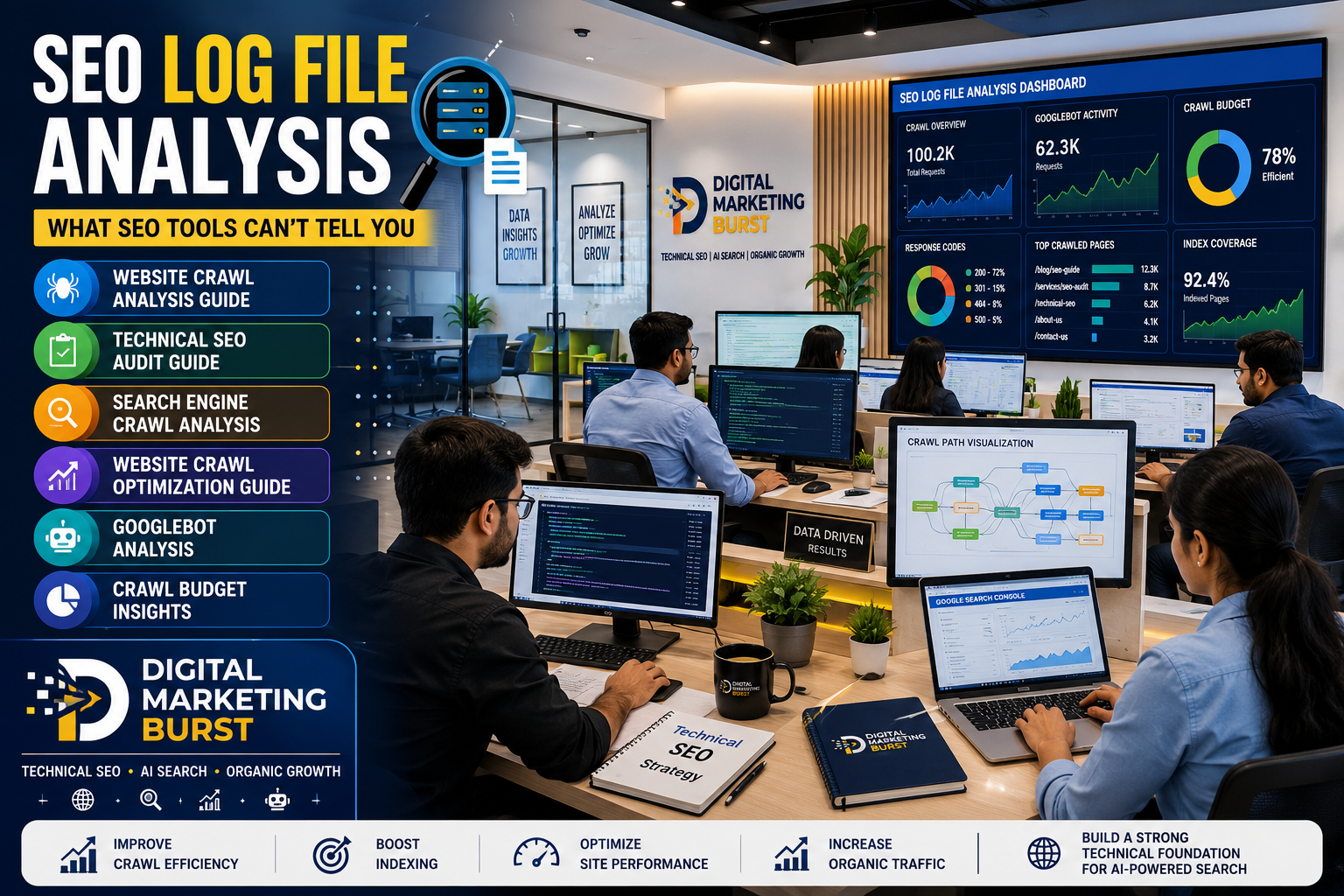
Why Log File Data Is Different from SEO Tools
Most SEO platforms estimate crawl behaviour by analysing websites from the outside. Server log files, however, record every interaction directly on your web server. This means they reveal exactly what happened rather than predicting or estimating crawler activity.
A log file contains valuable information such as crawler IP addresses, requested URLs, timestamps, HTTP response codes, user agents, and server responses. These details help identify how Googlebot and other search engine crawlers spend their crawl budget across your website.
Because this information comes directly from your server, it provides a much more accurate picture of crawler behaviour than external tools alone.
SEO Log File Analysis
A proper SEO Log File Analysis helps website owners understand how search engines actually discover, crawl, and revisit website content. Instead of relying only on crawl simulations, you can examine real requests made by Googlebot and other search engine bots.
For example, log files can reveal whether important landing pages are crawled regularly or ignored for long periods. They can also identify unnecessary crawling of outdated URLs, parameter pages, duplicate content, or redirected pages that consume valuable crawl budget.
This information allows technical SEO specialists to improve website architecture, optimise internal linking, reduce crawl waste, and strengthen indexation efficiency.
SEO Server Log Analysis
SEO Server Log Analysis goes one step further by helping identify hidden technical issues that may never appear inside traditional SEO auditing software.
By analysing server logs, website owners can detect crawl anomalies, unexpected spikes in bot activity, slow server responses, frequent server errors, and inefficient crawler behaviour. These insights help prioritise technical improvements that directly influence crawl efficiency.
Server log analysis also helps determine whether recent technical changes have improved or reduced crawler accessibility over time.
What Information Do Log Files Actually Contain?
Every server log entry records details about a visitor or crawler request. For SEO professionals, some of the most valuable information includes:
- Date and time of each crawl request.
- Requested URL.
- HTTP status code.
- User agent identifying Googlebot or other crawlers.
- Response size and server response time.
- IP address making the request.
Together, these data points create a detailed picture of how search engines interact with your website, allowing much deeper technical analysis than most SEO platforms can provide.
Why Technical SEO Professionals Use Log Files
Technical SEO decisions become far more reliable when supported by actual crawl data. Instead of assuming Google is visiting important pages frequently, log files confirm exactly what happens.
This allows businesses to identify crawling priorities, improve internal linking, remove unnecessary crawl paths, resolve server issues, and strengthen overall website performance.
At Digital Marketing Burst, we view log file analysis as one of the most valuable technical SEO resources because it reveals how search engines truly experience your website rather than how optimisation tools estimate crawler behaviour.
Website Crawl Analysis Guide
A detailed Website Crawl Analysis Guide helps you understand how search engines navigate every section of your website. While SEO tools simulate crawls, log files reveal what actually happens when Googlebot and other search engine bots visit your pages. This distinction is important because real crawl behaviour often differs from what third-party tools predict.
Website crawl analysis allows you to identify which pages receive the most crawler attention, which URLs are rarely visited, and whether valuable crawl budget is being wasted on outdated or duplicate pages. Many websites unknowingly allow bots to spend time crawling parameter URLs, old redirects, or low-value pages instead of important landing pages.
By reviewing server logs regularly, technical SEO professionals can reorganize internal linking, improve site architecture, remove unnecessary crawl paths, and ensure search engines prioritize the pages that matter most.
Website Crawling Guide
A practical Website Crawling Guide begins with understanding how search engines discover new content. Crawlers start by following internal links, XML sitemaps, backlinks, and previously indexed pages. As they move through a website, they evaluate page quality, response codes, loading speed, and overall accessibility.
Good website architecture makes crawling more efficient. Pages should be connected through logical internal links, descriptive navigation, and clean URL structures. Broken links, redirect chains, and duplicate pages create unnecessary obstacles that reduce crawl efficiency.
Publishing valuable content consistently also encourages search engines to revisit websites more frequently. Regular updates signal that a website remains active and worth crawling.
Why Crawl Budget Matters
Every website has a crawl budget, which represents the amount of time and resources search engines allocate to crawling its pages. Large websites with thousands of URLs benefit significantly from efficient crawl budget management.
If Googlebot spends excessive time crawling duplicate pages, filtered URLs, session parameters, or outdated redirects, fewer resources remain available for discovering important content.
Log file analysis helps identify exactly where crawl budget is being consumed. Website owners can then improve robots.txt rules, canonical tags, internal linking, and sitemap structures to guide crawlers toward high-value pages.
Optimizing crawl budget becomes especially important for eCommerce websites, large blogs, news portals, and enterprise websites that publish content frequently.
Search Engine Crawl Analysis
A comprehensive Search Engine Crawl Analysis provides insights that traditional website crawlers cannot fully replicate. Instead of estimating crawl behaviour, server logs reveal precisely when Googlebot visited each page, how often important URLs were requested, and which response codes were returned.
This information helps identify crawl inconsistencies that may affect indexing. Pages returning repeated server errors, slow responses, or redirect chains become immediately visible through log analysis.
Technical SEO specialists also use crawl analysis to verify whether newly published content receives timely crawler attention. If important pages remain uncrawled for extended periods, website architecture or internal linking may require improvement.
Googlebot Crawl Analysis
Googlebot Crawl Analysis focuses specifically on Google’s primary search crawler. Since Google generates most organic traffic for many websites, understanding Googlebot’s behaviour provides valuable technical insights.
Log files reveal whether Googlebot frequently visits category pages, blog posts, product pages, or supporting content. They also show how often Google revisits updated articles, discovers new pages, and responds to technical changes.
Monitoring Googlebot activity over time allows website owners to measure the impact of SEO improvements. Faster crawling, improved response codes, and increased visits to priority pages often indicate stronger technical optimisation.
Businesses that regularly review Googlebot crawl patterns are better positioned to improve indexation, strengthen technical SEO, and support long-term organic growth.
At Digital Marketing Burst, we recommend combining crawl analysis with traditional SEO reporting to gain a complete understanding of website performance. Together, these data sources provide far more accurate technical insights than relying on external SEO tools alone.
Technical SEO Audit Guide
A complete Technical SEO Audit Guide involves much more than checking page titles, broken links, or metadata. While these elements remain important, technical SEO also requires understanding how search engine crawlers interact with your website in real time. This is where server log files become extremely valuable.
Traditional SEO tools provide excellent reports based on website scans and publicly available information. However, they cannot always reveal how Googlebot behaves after reaching your server. Log files bridge this gap by showing every request made by search engine bots, including successful visits, crawl frequency, server response codes, and areas where crawl resources may be wasted.
A comprehensive technical audit should review crawl activity, indexation status, page speed, internal linking, canonical tags, XML sitemaps, robots.txt configuration, redirect chains, duplicate content, structured data, and server health. Together, these factors provide a complete picture of your website’s technical performance.
Complete Technical SEO Guide
A Complete Technical SEO Guide should focus on building a website that is easy for both users and search engines to navigate. Strong technical foundations improve crawl efficiency, indexing, website performance, and user experience simultaneously.
Begin by ensuring your website loads quickly across desktop and mobile devices. Slow pages often create poor user experiences while reducing crawler efficiency. Compressing images, optimising code, improving hosting performance, and enabling browser caching all contribute to faster loading speeds.
Website architecture also plays a significant role. Important pages should never require numerous clicks to reach. Clear navigation, descriptive URLs, breadcrumb trails, and logical internal linking help search engines understand relationships between different sections of the website.
How Log Files Reveal Hidden Technical Problems
One of the greatest advantages of log file analysis is its ability to uncover problems that standard auditing software may overlook. For example, search engine bots may repeatedly crawl outdated redirect chains, obsolete pages, or URLs blocked from indexing. These issues consume crawl budget without providing any SEO benefit.
Log files can also identify frequent server errors such as HTTP 404, 500, or timeout responses. If Googlebot repeatedly encounters these issues, important pages may receive less crawl attention over time.
Another valuable insight involves crawl frequency. Some important pages may rarely receive crawler visits despite being included in XML sitemaps. This often indicates weak internal linking or poor website architecture that should be improved.
Common Issues Found During Log File Reviews
Regular log analysis frequently uncovers technical problems that directly influence search visibility. Duplicate URLs generated by tracking parameters, excessive redirect chains, orphan pages with no internal links, and unnecessary bot activity are common findings.
Websites that publish large volumes of content may also discover that search engine crawlers spend considerable time revisiting low-value pages instead of indexing newly published content. Addressing these inefficiencies helps improve crawl allocation and strengthens overall website performance.
Technical SEO specialists also monitor unusual crawler behaviour, such as sudden increases or decreases in crawl frequency, which sometimes indicate broader technical issues requiring investigation.
Why Technical SEO Continues to Matter
Artificial intelligence, machine learning, and evolving search experiences continue changing how search engines evaluate websites. Despite these changes, technical SEO remains one of the strongest foundations for sustainable organic visibility.
A technically healthy website allows crawlers to discover content efficiently, interpret website structure correctly, and process information with fewer obstacles. Combined with helpful content and positive user experience, technical optimisation supports long-term search performance regardless of algorithm updates.
At Digital Marketing Burst, we believe technical SEO should be viewed as an ongoing process rather than a one-time task. Regular audits, continuous monitoring, and thoughtful optimisation help websites remain competitive as search technology continues evolving.
Search Engine Crawl Analysis
A thorough Search Engine Crawl Analysis helps website owners understand exactly how search engines interact with every section of their website. Unlike third-party SEO platforms that estimate crawler activity, server log files provide direct evidence of which URLs are visited, how frequently they are crawled, and whether search engines encounter any obstacles during the process.
This information becomes particularly valuable for large websites where thousands of pages compete for crawl attention. By reviewing crawl behaviour, technical SEO specialists can determine whether important landing pages receive adequate attention while identifying low-value pages that unnecessarily consume crawl resources.
Search engine crawl analysis also helps measure the effectiveness of recent technical improvements. After updating internal links, improving page speed, or restructuring navigation, server logs can confirm whether search engines respond by crawling important pages more efficiently.
Googlebot Crawl Analysis
A focused Googlebot Crawl Analysis provides insights into the behaviour of Google’s primary search crawler. Since Google generates a significant portion of organic traffic for many websites, understanding how Googlebot accesses content is essential for long-term SEO success.
Server logs reveal which sections of a website receive frequent Googlebot visits and which pages are rarely crawled. This information often highlights opportunities to strengthen internal linking, improve crawl paths, or remove technical barriers that limit efficient crawling.
Tracking Googlebot activity over several weeks or months also helps identify patterns. Increased crawl frequency often follows improvements in content quality, website architecture, or technical optimisation, while declining crawl activity may indicate issues requiring further investigation.
Website Crawl Optimization Guide
A successful Website Crawl Optimization Guide focuses on helping search engines reach important content quickly and efficiently. Optimising crawl behaviour is not about increasing the total number of crawler visits but ensuring available crawl resources are spent on valuable pages.
Improving crawl efficiency begins with maintaining a logical website structure. Pages should be organised into clear categories with descriptive navigation and strong internal links connecting related content. XML sitemaps should remain updated whenever significant content changes occur, while canonical tags help reduce unnecessary duplication.
Regularly reviewing crawl reports also helps identify orphan pages, redirect chains, duplicate URLs, and broken links that reduce crawler efficiency. Addressing these issues strengthens overall technical health while improving indexation opportunities.
Website Crawl Optimization Tips
Effective Website Crawl Optimization Tips often focus on small technical improvements that produce significant long-term benefits. Removing unnecessary redirects, correcting broken links, reducing duplicate content, and simplifying website navigation all contribute to better crawl performance.
Large websites should also review parameter URLs generated by filters or tracking systems. If these pages provide little unique value, preventing unnecessary crawling helps preserve crawl budget for more important content.
Page speed optimisation is another important factor. Fast-loading pages reduce server response times, allowing crawlers to process more content efficiently. Compressing images, optimising scripts, and improving hosting performance all support better technical SEO.
Why Log Files Support Better SEO Decisions
Log files provide measurable evidence rather than assumptions. Instead of guessing how search engines interact with your website, server logs reveal actual crawler behaviour, helping businesses prioritise technical improvements based on real data.
These insights support better decisions regarding crawl budget management, internal linking, indexing priorities, server performance, and website architecture. Businesses that regularly analyse server logs often identify technical opportunities long before they become visible in standard SEO reporting tools.
At Digital Marketing Burst, we recommend combining log file analysis with traditional SEO reporting to build a more complete technical optimisation strategy. Using both sources together provides deeper visibility into website performance while helping businesses prepare for the continued evolution of search engines and AI-powered search.
How Log File Analysis Improves Crawl Budget Management
One of the biggest advantages of reviewing server logs is understanding how search engines spend their crawl budget. Every website receives a limited amount of crawler attention, especially large websites with thousands of URLs. If search engines repeatedly visit outdated pages, duplicate URLs, or unnecessary parameters, valuable crawl resources are wasted instead of being used for important content.
Log file analysis helps identify these inefficiencies with real data. Instead of relying on assumptions, website owners can see exactly which URLs Googlebot requests most frequently and which important pages receive little or no crawler attention. Once these patterns become clear, technical improvements such as updating internal links, improving XML sitemaps, removing redirect chains, and consolidating duplicate pages become much easier to prioritize.
Efficient crawl budget management ensures search engines spend more time discovering valuable content rather than repeatedly processing low-value pages.
Finding Crawl Errors Before They Affect Rankings
Not every technical issue immediately appears inside standard SEO reporting tools. Server logs often reveal problems much earlier because they record every crawler request made to your website.
Repeated HTTP 404 errors, server timeouts, redirect loops, slow response times, and blocked resources become visible through log analysis. These issues may prevent important pages from being crawled consistently, eventually affecting indexation and search visibility if left unresolved.
Regular monitoring allows technical SEO teams to resolve these problems before they become larger indexing issues. Preventive maintenance usually requires less effort than correcting widespread crawl problems after search performance begins declining.
Improving Website Architecture with Log File Insights
Website architecture directly influences how efficiently search engines discover content. Even high-quality articles may receive limited crawl attention if they are buried deep within complicated navigation structures.
Log files reveal how crawlers move between pages and where they stop exploring. Pages that receive very few crawler visits often benefit from stronger internal linking or improved placement within the website hierarchy.
Organizing content into logical categories, creating topic clusters, simplifying navigation, and maintaining descriptive URLs all contribute to a website that is easier for both users and search engines to understand.
Well-structured websites generally experience more consistent crawling, stronger indexation, and better long-term organic visibility.
Combining Google Search Console with Log File Analysis
Google Search Console provides valuable information about indexing, impressions, clicks, and crawl statistics. However, combining these reports with server log data creates a much more complete technical SEO strategy.
For example, Search Console may show that a page is indexed, while server logs reveal that Googlebot rarely visits it. Alternatively, log files may identify frequent crawler activity on pages that receive little search visibility, highlighting opportunities for further optimization.
Using both data sources together allows businesses to verify technical changes, evaluate crawl behaviour, and measure the effectiveness of ongoing SEO improvements with greater confidence.
Digital Marketing Burst’s Approach to Technical SEO
At Digital Marketing Burst, we believe technical SEO should be driven by measurable evidence rather than assumptions. Our approach combines log file analysis, crawl optimization, indexing improvements, website architecture reviews, technical audits, and performance monitoring to help businesses build stronger digital foundations.
Rather than focusing only on rankings, we examine how search engines actually interact with websites. Understanding crawler behaviour, identifying technical barriers, and continuously improving website performance help create sustainable organic growth that adapts to evolving search technologies.
A technically healthy website benefits users, search engines, and businesses alike. By combining traditional SEO tools with server log analysis, organizations gain deeper insights that support smarter optimization decisions and long-term online success.
Frequently Asked Questions About SEO Log File Analysis
What is SEO Log File Analysis?
SEO Log File Analysis is the process of examining your web server’s log files to understand how search engine crawlers interact with your website. Unlike many SEO tools that estimate crawler behaviour, log files record actual requests made by Googlebot and other search engine bots. This helps website owners identify crawl patterns, server issues, and technical opportunities that may affect search visibility.
Why is log file analysis important for SEO?
Log file analysis provides direct insight into how search engines crawl your website. It can reveal whether important pages are being visited regularly, whether crawl budget is being wasted on unnecessary URLs, and whether server errors are preventing efficient crawling. These insights help improve technical SEO and overall website performance.
Can Google Search Console replace log file analysis?
No. Google Search Console and log file analysis complement each other rather than replacing one another. Search Console provides information about indexing, search performance, and website health, while server logs show exactly how crawlers interact with your website. Using both together gives a more complete understanding of technical SEO.
Which websites benefit most from log file analysis?
Large websites, eCommerce stores, news portals, enterprise websites, educational platforms, and websites publishing content frequently benefit the most. However, even smaller websites can use server logs to identify crawl errors, monitor Googlebot activity, and improve technical optimisation.
How often should server logs be reviewed?
The ideal review frequency depends on website size and publishing activity. Large websites may analyse logs weekly, while smaller websites often benefit from monthly reviews. Performing additional log analysis after website migrations, redesigns, or major technical updates is also recommended.
Does log file analysis improve rankings directly?
Log file analysis itself does not improve rankings. Instead, it identifies technical issues that can influence crawl efficiency, indexing, and website performance. Resolving these problems creates stronger technical foundations that support long-term organic visibility.
Final Thoughts
Traditional SEO tools remain valuable for monitoring rankings, backlinks, keywords, and technical health. However, they cannot fully replace the insights available through server log files. Understanding how search engine crawlers actually interact with your website provides information that external SEO tools often cannot access.
By combining SEO Log File Analysis, crawl optimisation, technical audits, website architecture improvements, and ongoing performance monitoring, businesses gain a clearer understanding of how search engines process their content. This allows technical decisions to be based on measurable evidence instead of assumptions.
At Digital Marketing Burst, we believe successful technical SEO depends on combining accurate data with practical optimisation strategies. Log file analysis helps uncover hidden crawl behaviour, improve website efficiency, strengthen indexation, and support sustainable organic growth as search technology continues evolving.
Common Log File Analysis Mistakes That Affect SEO
Many website owners begin reviewing server logs but overlook the information that matters most. Simply collecting log files is not enough. The real value comes from identifying patterns that reveal how search engine crawlers interact with your website over time.
One common mistake is analysing only a few days of data. Crawl behaviour often changes depending on new content, technical updates, website migrations, or algorithm changes. Reviewing a longer period provides a more accurate picture of crawler activity and helps identify recurring issues.
Another frequent mistake is ignoring response codes. Pages returning repeated 404, 301, 302, or 500 responses may consume crawl resources unnecessarily. Resolving these issues improves crawler efficiency while strengthening overall technical SEO.
Businesses should also distinguish between human visitors and search engine bots. Filtering log files correctly ensures that SEO decisions are based on crawler behaviour rather than regular user traffic.
How Log File Analysis Supports Website Migrations
Website migrations often introduce technical challenges that are difficult to detect immediately. Redirects, URL changes, internal linking updates, and sitemap modifications can all influence how search engines crawl a website.
Server logs allow SEO professionals to verify whether Googlebot successfully discovers new URLs after a migration. They also reveal whether outdated URLs continue receiving excessive crawl requests or whether redirect chains require further optimisation.
Monitoring log files during and after a migration helps identify issues before they negatively affect indexing and organic visibility. This makes log analysis one of the most valuable tools for ensuring a smooth website transition.
Using Log File Data to Improve Internal Linking
Internal linking influences how search engines move through a website. Pages receiving strong internal links are generally easier for crawlers to discover, while isolated pages may receive little crawl attention.
Log file analysis helps identify pages that Googlebot rarely visits. These pages often benefit from additional contextual internal links placed within related articles or category pages.
Strengthening internal linking not only improves crawl efficiency but also helps distribute authority across important sections of the website. Over time, this creates a more organised website structure that benefits both users and search engines.
Future of Log File Analysis in AI-Powered Search
As AI-powered search continues evolving, technical SEO remains essential. Search engines still depend on efficient crawling, accurate indexing, and accessible website architecture to understand online content.
Log file analysis provides direct evidence of crawler behaviour, making it an important resource for businesses preparing for future search technologies. Websites that continuously monitor crawl activity, optimise technical performance, and improve content organisation are better positioned to adapt to changing search environments.
At Digital Marketing Burst, we believe the combination of technical expertise, server log insights, and high-quality content creates a sustainable SEO strategy. Businesses that understand how search engines actually interact with their websites can make smarter optimisation decisions and build stronger long-term organic growth.
How Enterprise Websites Benefit from Log File Analysis
Large enterprise websites often contain thousands or even millions of URLs. Managing crawl efficiency at this scale becomes much more challenging than on smaller websites. Server log analysis helps technical SEO teams understand exactly where search engines spend their crawl resources and whether valuable pages are receiving enough attention.
For example, an eCommerce website may have thousands of product pages generated by filters and search parameters. Without careful monitoring, search engine bots can spend significant time crawling low-value URLs instead of important product or category pages. Log files reveal these patterns, allowing SEO teams to refine robots.txt rules, canonical tags, XML sitemaps, and internal linking structures.
Enterprise organisations also use log file analysis to monitor international websites, language versions, and regional content. Reviewing crawler behaviour across multiple markets helps maintain consistent technical SEO performance while improving indexation efficiency.
Log File Analysis for eCommerce SEO
eCommerce websites publish large amounts of dynamic content, making crawl management especially important. Products frequently go out of stock, categories change, and seasonal pages are created throughout the year. Server logs help identify whether Googlebot discovers these changes efficiently.
Technical SEO specialists can determine whether newly launched products receive crawler attention quickly or whether outdated product pages continue consuming crawl budget. This information supports better inventory management, category optimisation, and internal linking improvements.
Log file analysis also helps detect repeated crawler requests to unnecessary parameter URLs generated by sorting, filtering, or session identifiers. Reducing these crawl paths allows search engines to focus on valuable commercial pages.
Measuring the Success of Technical SEO Improvements
One advantage of server log analysis is the ability to verify whether technical changes actually improve crawler behaviour. After implementing new internal links, simplifying navigation, updating XML sitemaps, or resolving redirect chains, website owners can monitor server logs to measure the results.
Successful optimisation often leads to more consistent crawler visits to priority pages, fewer requests for outdated URLs, and improved response times. Comparing crawl behaviour before and after technical updates provides measurable evidence that supports future SEO decisions.
Instead of relying only on ranking changes, businesses gain direct insight into how search engines respond to technical improvements.
Preparing Websites for the Future of Search
Search technology continues evolving through artificial intelligence, machine learning, and more advanced content understanding. Despite these innovations, search engines still depend on efficient crawling and technically accessible websites.
Businesses that maintain organised site architecture, optimise internal linking, improve server performance, and monitor crawl behaviour are better prepared for future search developments. Log file analysis remains valuable because it shows real interactions between search engine crawlers and website infrastructure.
At Digital Marketing Burst, we encourage organisations to combine traditional SEO reporting with technical server analysis. This balanced approach provides a clearer understanding of website performance while helping businesses adapt confidently to changing search technologies and evolving user behaviour.
Best Tools for SEO Log File Analysis
Choosing the right tools makes log file analysis faster and more accurate. While many SEO platforms provide crawl reports, dedicated log analysis tools process raw server data and reveal exactly how search engine bots interact with your website.
Popular log analysis solutions allow technical SEO professionals to identify Googlebot activity, crawl frequency, HTTP response codes, orphan pages, redirect chains, and server errors. Combining these insights with analytics and crawl reports provides a much more complete understanding of website performance.
Businesses do not always need expensive enterprise software to begin analysing logs. Many web hosting providers allow access to server logs, which can then be reviewed using specialised analysis software or custom reporting dashboards. The important factor is reviewing the data consistently and acting on the insights rather than simply collecting reports.
Log File Analysis vs Traditional SEO Tools
Traditional SEO tools remain essential for monitoring rankings, backlinks, keywords, Core Web Vitals, and technical issues. However, they cannot directly observe every interaction between search engine crawlers and your web server.
Server log files record real crawler requests, making them an invaluable source of technical SEO information. For example, an SEO crawler may report that a page is accessible, while server logs reveal that Googlebot rarely visits it. Likewise, a technical audit might identify redirect chains, but log files show whether search engines are actually spending crawl resources on those redirects.
The strongest technical SEO strategy combines both approaches. Traditional tools explain what may need attention, while log files confirm what search engines are truly doing.
Building a Long-Term Technical SEO Strategy
Technical SEO is not a one-time project. Websites grow over time as new pages, products, blog articles, and resources are added. Without regular monitoring, crawl inefficiencies and indexing problems can gradually accumulate.
Creating a long-term strategy involves scheduling periodic technical audits, reviewing server logs, monitoring crawl behaviour, updating XML sitemaps, improving internal linking, and checking website performance after major changes. Small improvements made consistently often produce stronger long-term results than occasional large-scale fixes.
Keeping documentation of technical changes also helps teams understand which improvements positively influenced crawler behaviour and which areas still require attention.
Why Data-Driven SEO Produces Better Results
Successful SEO decisions should be based on measurable evidence rather than assumptions. Server log analysis provides factual information about crawler behaviour, allowing businesses to prioritise technical improvements with confidence.
Instead of guessing why certain pages are not indexed or why crawl frequency has changed, log files provide direct answers supported by real server activity. This approach reduces unnecessary experimentation and helps technical teams focus on improvements that have the greatest impact.
At Digital Marketing Burst, we believe combining technical expertise, high-quality content, website performance optimisation, and data-driven analysis creates a stronger foundation for sustainable organic growth. As search engines continue evolving, businesses that rely on accurate technical insights will be better positioned to maintain visibility and improve long-term search performance.
Frequently Asked Questions
Can small websites benefit from SEO Log File Analysis?
Yes. Even smaller websites can use log file analysis to understand how Googlebot and other search engine crawlers access their content. It helps identify crawl errors, unnecessary redirects, server issues, and pages that receive little crawler attention.
How often should I review my server log files?
For websites that publish content regularly, reviewing log files once a month is a good starting point. Larger websites, eCommerce stores, and news websites often benefit from weekly monitoring because crawl activity changes more frequently.
Which search engines appear in server log files?
Depending on your website, server logs may include crawlers such as Googlebot, Bingbot, Applebot, DuckDuckBot, and other legitimate search engine bots. Monitoring these user agents helps you understand how different search engines interact with your content.
Is log file analysis useful after a website migration?
Absolutely. Reviewing server logs after a migration helps confirm that search engine crawlers are finding new URLs, following redirects correctly, and reducing visits to outdated pages. This makes it easier to identify technical issues before they affect search visibility.
Do I need coding knowledge to analyse log files?
Basic technical knowledge is helpful, but many log analysis platforms provide visual reports that make the data easier to understand. Working with an experienced technical SEO professional can also help interpret complex server data and prioritise improvements.
Can log file analysis improve AI search readiness?
While log file analysis does not directly optimise content for AI-generated results, it helps ensure that search engine crawlers can efficiently discover, access, and process your website. Strong technical foundations remain important as AI-powered search continues to evolve.
Key Takeaways
Log file analysis provides information that traditional SEO platforms cannot fully replicate. By examining real crawler activity instead of estimated crawl behaviour, businesses gain deeper insight into how search engines interact with their websites.
Regular server log reviews help identify crawl budget inefficiencies, indexing challenges, server errors, redirect issues, and opportunities to improve website architecture. Combining these insights with traditional SEO reporting creates a more complete technical optimisation strategy.
Consistent monitoring also helps measure the impact of technical improvements over time, allowing businesses to make informed decisions based on actual crawler behaviour rather than assumptions.
Final Thoughts
SEO continues to evolve, but one principle remains unchanged: search engines need to discover, crawl, and understand your website efficiently before your content can perform well in search results.
A strong technical foundation supported by SEO Log File Analysis, thoughtful website architecture, crawl optimisation, and ongoing technical audits allows businesses to improve website health and prepare for future search developments. Rather than replacing traditional SEO tools, log file analysis complements them by revealing valuable insights that external crawlers cannot see.
At Digital Marketing Burst, we believe successful SEO combines technical excellence, high-quality content, and continuous performance monitoring. Using real server data alongside modern SEO tools helps businesses make smarter optimisation decisions and build sustainable long-term organic growth.
Why Choose Digital Marketing Burst for Technical SEO and AI Search Optimization?
In today’s competitive digital landscape, businesses need more than basic SEO. They need a strategy built on technical expertise, data-driven decisions, and continuous optimization. Digital Marketing Burst is a trusted digital marketing agency based in Lucknow, India, helping businesses improve their online visibility through advanced SEO, technical audits, AI search optimization, and performance-focused digital marketing strategies.
Our team specializes in SEO Log File Analysis, Technical SEO Audits, Website Crawl Analysis, Google Search optimization, and AI-ready website strategies. Instead of relying on assumptions, we analyze real website data to uncover technical issues, improve crawl efficiency, strengthen indexation, and create long-term organic growth opportunities.
Businesses choose Digital Marketing Burst because we focus on measurable results, transparent communication, and modern SEO practices that adapt to Google’s evolving algorithms and AI-powered search experiences. Whether you’re looking to improve technical SEO, increase organic traffic, optimize website performance, or prepare your website for the future of AI search, our experienced team develops customized strategies aligned with your business goals.
Why Businesses Trust Digital Marketing Burst
- Experienced Technical SEO professionals
- Advanced SEO Log File Analysis expertise
- Comprehensive Website Crawl & Technical SEO Audits
- AI Search Optimization strategies
- Data-driven SEO recommendations
- Transparent reporting and measurable insights
- Customized digital marketing solutions
- Dedicated support for businesses across India
At Digital Marketing Burst, our mission is to help businesses build stronger websites, improve search visibility, and achieve sustainable organic growth through ethical, technically sound, and future-ready digital marketing strategies. If your goal is long-term online success, our team is ready to help you create a stronger digital presence.