






After the AI Content Flood: How Better Content Architecture Improves SEO, Personalization & Organic Traffic
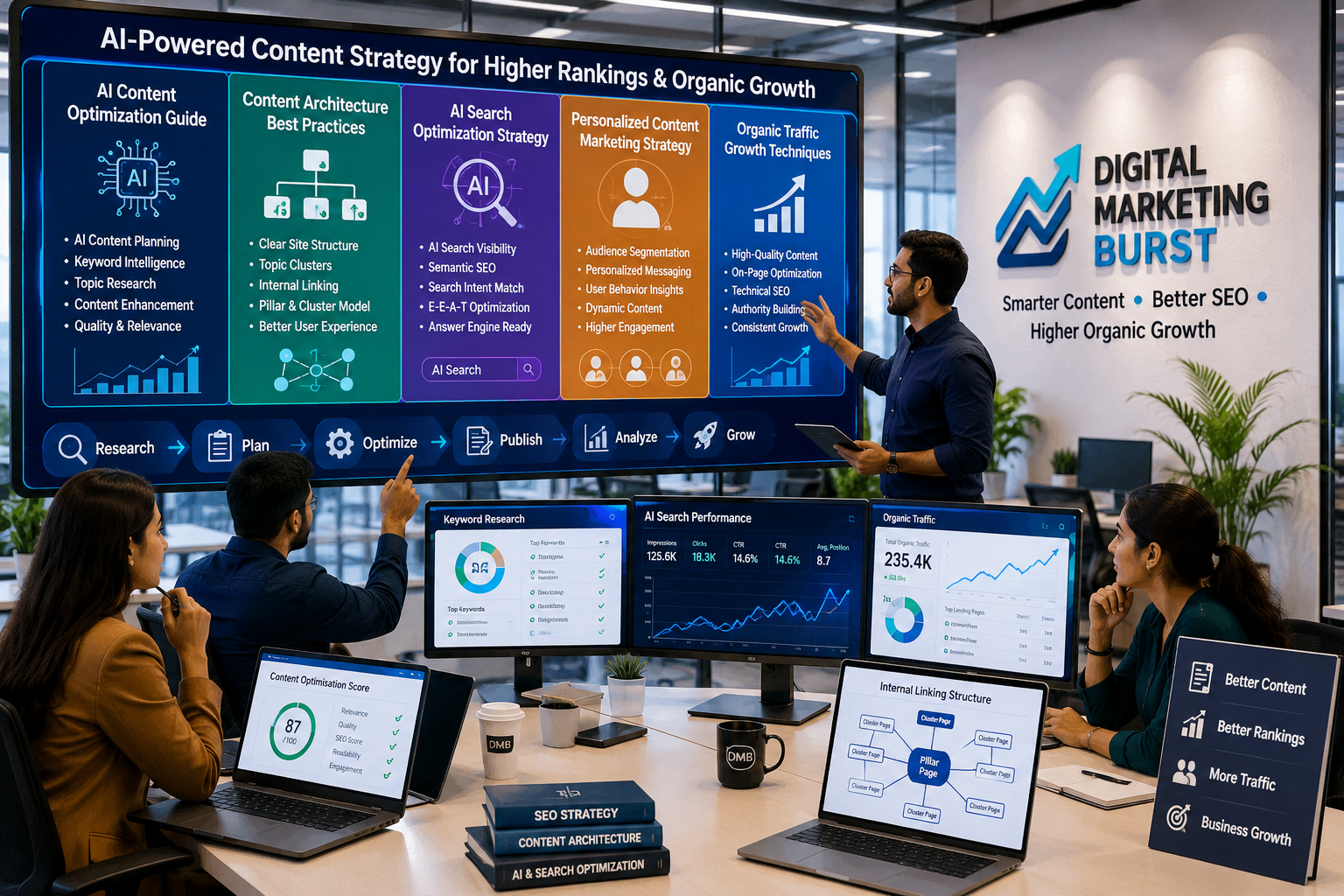
AI Content Optimization Guide, Content Architecture Best Practices, AI Search Optimization Strategy, Personalized Content Marketing Strategy, and Organic Traffic Growth Techniques have become essential topics as businesses adapt to an internet filled with AI-generated content. Publishing more content is no longer enough. Today’s websites need clear organization, helpful information, and a user-first structure that helps both people and search engines understand every page. This guide explains how stronger content architecture supports SEO, improves personalized experiences, and creates sustainable organic growth.
Artificial intelligence has dramatically changed content creation. Businesses can now produce articles faster than ever before. However, the rapid increase in AI-generated pages has also created a new challenge: information overload. Users no longer struggle to find content. Instead, they struggle to find content that is organized, trustworthy, and genuinely useful.
Search engines face the same challenge. Modern algorithms evaluate far more than individual keywords. They analyze topical relevance, website structure, user intent, internal linking, page quality, and overall content organization. As AI-generated material becomes increasingly common, websites with strong content architecture gain a significant advantage.
At Digital Marketing Burst, we believe long-term SEO success comes from combining quality content with logical website organization. Creating valuable information is only the first step. Presenting that information through a well-planned content architecture makes it easier for readers and search engines to navigate your website.
AI Content Optimization Guide
An effective AI Content Optimization Guide begins with one important principle: AI should support human expertise rather than replace it.
Artificial intelligence can accelerate research, idea generation, and drafting. Nevertheless, human editing remains essential. Content should answer real questions, include accurate information, and reflect genuine experience.
Optimization also extends beyond individual articles. Every page should contribute to a larger topical framework. Related articles should connect naturally through internal links, helping visitors explore additional resources while strengthening your website’s authority.
High-quality AI-assisted content is accurate, readable, and carefully reviewed before publication. It focuses on solving problems instead of simply increasing word count.
AI Content Strategy Guide
Developing an AI Content Strategy Guide requires more than publishing frequent articles. Successful websites build complete topic ecosystems that address every stage of the user’s journey.
Begin by identifying your audience’s most common questions. Group related subjects together and create supporting articles that expand each topic in greater depth. This cluster-based approach improves topical authority while making navigation easier.
AI tools can help identify opportunities, but editorial decisions should always prioritize usefulness. Every article should contribute unique value rather than repeating existing information.
Consistency is equally important. Publishing well-structured content on a regular schedule builds trust with both readers and search engines.
Why the AI Content Flood Changed SEO
The growing volume of AI-generated content has changed how search engines evaluate quality.
Previously, publishing numerous articles often produced positive results. Today, search engines emphasize originality, expertise, helpfulness, and organization. Websites that simply generate large quantities of similar content may struggle to maintain visibility.
Instead of focusing only on production speed, businesses should concentrate on creating complete content experiences. Strong internal linking, logical navigation, clear page hierarchy, and comprehensive topic coverage help visitors find information efficiently.
These improvements also help search engines understand the relationship between different pages, strengthening overall website authority.
The Role of Content Architecture in Modern SEO
Content architecture is the framework that organizes information across your website.
Every article should fit naturally within a broader content structure. Categories, internal links, navigation menus, topic clusters, and supporting resources all contribute to this architecture.
When readers easily discover related information, they spend more time exploring your website. Likewise, search engines gain a clearer understanding of your expertise across multiple topics.
A strong content architecture therefore benefits both usability and long-term SEO performance.
Content Architecture Best Practices
Publishing high-quality content is only one part of building a successful website. Equally important is organizing that content so visitors can easily find related information. Following strong Content Architecture Best Practices helps search engines understand how your pages connect while improving the overall browsing experience.
Start by grouping articles into clear topic categories. Each category should focus on one primary subject, supported by detailed articles that answer specific questions. Instead of creating isolated pages, connect related content through natural internal links. This structure forms topic clusters that make navigation easier for readers.
Navigation menus should remain simple and consistent. Visitors should reach important pages within just a few clicks. Clear categories, logical URLs, descriptive headings, and breadcrumb navigation all contribute to a stronger content architecture.
Regular content audits are also essential. Over time, websites accumulate outdated articles, duplicate topics, and broken links. Reviewing your content every few months helps identify opportunities to improve organization, update information, and strengthen internal linking.
A well-planned content structure benefits users first. Search engines recognize this improved organization and can more easily understand your website’s topical relationships.
Website Content Structure Guide
An effective Website Content Structure Guide begins with understanding user intent. Visitors arrive with specific questions, so your website should guide them naturally toward relevant information without creating confusion.
Organize content using a hierarchy. Core pages introduce broad topics, while supporting articles provide deeper explanations. Each page should link naturally to related content, encouraging readers to continue learning.
Avoid publishing multiple articles that compete for the same search intent. Instead, create comprehensive cornerstone pages supported by specialized content. This approach strengthens topical authority and reduces unnecessary duplication.
Page design also matters. Clear headings, short paragraphs, descriptive images, and logical formatting improve readability. Visitors who quickly understand your content are more likely to remain engaged.
AI Search Optimization Strategy
Search technology continues evolving rapidly, making an effective AI Search Optimization Strategy increasingly important. AI-powered search systems evaluate content differently from traditional keyword-based algorithms. They focus on relevance, context, clarity, and helpfulness.
Rather than optimizing only for individual keywords, create content that answers complete questions. Explain concepts thoroughly while using natural language that reflects how people actually search.
AI search also benefits from strong internal linking. When related articles connect logically, search systems better understand the depth of your expertise across an entire topic.
Structured data, descriptive headings, optimized images, and fast-loading pages further improve how AI-powered systems interpret your website.
AI Search Visibility Strategy
Developing an AI Search Visibility Strategy means thinking beyond rankings alone. Visibility now includes appearing in AI-generated summaries, conversational search experiences, featured snippets, and other enhanced search formats.
Content should therefore be written clearly, organized logically, and supported by trustworthy information. Articles that answer common questions directly are more likely to be referenced across different search experiences.
Consistency also improves visibility. Publishing related content on a regular basis demonstrates expertise while strengthening topical authority over time.
Businesses should review emerging AI search trends regularly and adapt their content strategies accordingly instead of relying solely on traditional SEO methods.
Building Topic Clusters Instead of Individual Articles
Many websites publish articles independently without considering how they relate to one another. Modern SEO performs better when pages function as part of a larger knowledge network.
Begin with one comprehensive cornerstone article covering the primary topic. Then create supporting articles that explore individual aspects in greater detail. Connect these pages through contextual internal links.
For example, an article about AI content architecture could naturally connect with guides covering technical SEO, content personalization, search intent, internal linking, and semantic SEO.
This structure improves user navigation while helping search engines understand your website’s expertise across multiple related subjects.
Personalized Content Marketing Strategy
A strong Personalized Content Marketing Strategy starts with understanding your audience instead of publishing content for everyone. Visitors expect relevant answers that match their interests, industry, and stage of the buying journey. When content is tailored to real user intent, engagement improves naturally.
Personalization is no longer limited to email campaigns. Modern websites personalize recommendations through content hubs, related articles, learning resources, and logical internal linking. Someone reading an article about AI search optimization may also want to explore topic clusters, technical SEO, or content architecture.
Rather than producing hundreds of disconnected articles, organize information so readers can move naturally from beginner topics to advanced guides. This creates a better experience while helping search engines understand topical relationships across your website.
Businesses that combine personalization with clear content organization often build stronger trust because visitors find useful information without unnecessary searching.
Personalized SEO Content Strategy
A successful Personalized SEO Content Strategy balances optimization with usability. Search engines increasingly reward pages that satisfy user intent instead of simply repeating keywords.
Create audience-specific content for different industries, business sizes, and customer needs. A startup owner may require beginner-friendly explanations, while an enterprise marketing team may prefer advanced implementation guides.
Content personalization also involves updating existing articles regularly. Refreshing statistics, improving examples, expanding explanations, and strengthening internal links keeps information useful over time.
When every page serves a clear purpose within your website, readers are more likely to continue exploring related resources.
Organic Traffic Growth Techniques
Sustainable Organic Traffic Growth Techniques focus on creating lasting value instead of chasing short-term ranking gains. Publishing helpful articles consistently, improving page speed, strengthening internal links, and organizing content into topic clusters all contribute to long-term visibility.
Another important strategy is identifying content gaps. Review the questions your audience asks most frequently, then create comprehensive resources that answer those questions completely.
Updating older content also plays a significant role. Improving headlines, refreshing examples, adding frequently asked questions, and expanding sections with new insights can increase the usefulness of existing articles.
Over time, these improvements help build topical authority and encourage repeat visits from readers.
Why Content Architecture Supports AI Search
AI-powered search systems evaluate context rather than isolated keywords. They analyze how pages connect, whether information is well organized, and how effectively content answers user questions.
This is where an AI Content Optimization Guide becomes especially valuable. Instead of focusing on keyword repetition, an AI Content Optimization Guide helps writers create structured, informative, and user-focused content. A practical AI Content Optimization Guide encourages logical headings, clear explanations, descriptive internal links, and content that demonstrates real expertise.
As AI search continues evolving, an AI Content Optimization Guide also emphasizes semantic relevance. Related concepts, supporting examples, and complete topic coverage help AI systems understand your website more effectively than repetitive keyword usage ever could.
Building Long-Term Authority
The websites that perform well over time are usually those that invest in quality instead of quantity. Creating comprehensive resources, organizing them logically, and updating them regularly builds trust with readers.
Digital Marketing Burst recommends developing content ecosystems rather than isolated blog posts. When every article connects naturally with related resources, visitors stay engaged longer and search engines gain a clearer understanding of your expertise.
AI Search Visibility Strategy
Search engines are evolving into intelligent answer engines. Instead of matching only keywords, they evaluate context, topical depth, and the overall usefulness of a website. An effective AI Search Visibility Strategy focuses on building a clear content ecosystem where every article supports a broader subject rather than existing as an isolated page.
Businesses that organize information into connected topic clusters help both readers and AI systems understand their expertise. For example, an article about content architecture should naturally connect with guides on semantic SEO, technical optimization, internal linking, and search intent. This approach makes the website easier to navigate while strengthening topical authority.
Visibility also depends on consistency. Publishing high-quality content regularly demonstrates expertise over time. Updating existing articles with fresh examples, current statistics, and improved explanations helps maintain relevance. Search systems value websites that continue to provide accurate, useful information instead of relying only on older content.
Another important factor is readability. Short paragraphs, descriptive headings, and logical formatting improve the experience for visitors. AI systems also benefit from well-structured pages because they can understand relationships between sections more effectively.
How Topic Clusters Strengthen SEO
Modern SEO focuses on expertise rather than individual keywords. Topic clusters allow websites to cover a subject comprehensively by connecting a main article with multiple supporting resources.
Imagine a central guide explaining AI content optimization. Supporting articles might discuss content architecture, user intent, AI search, internal linking, technical SEO, and content personalization. Together, these pages create a complete knowledge hub.
Readers benefit because they can continue exploring related subjects without searching elsewhere. Search engines benefit because the website demonstrates authority across an entire topic instead of relying on isolated content.
This strategy also improves internal linking. Each supporting article reinforces the others, creating stronger contextual relationships throughout the website.
Search Intent Should Guide Every Article
Many websites fail because they focus only on keywords instead of understanding why users search. Search intent is the real foundation of successful content.
A visitor searching for “content architecture” may be looking for definitions, implementation steps, examples, or best practices. Answering these related questions within one comprehensive resource creates a better user experience.
Researching customer questions, reviewing search trends, and analyzing existing content gaps all help identify what readers genuinely need. Creating articles that solve real problems naturally improves engagement and builds long-term trust.
Businesses that prioritize user intent often see stronger organic performance because their content aligns with what people actually want to learn.
The Importance of Internal Linking
Internal linking remains one of the most overlooked aspects of content optimization. Every important article should connect naturally with supporting resources that expand the discussion.
Instead of inserting links randomly, guide readers toward the next logical topic. Someone reading about AI search optimization may also benefit from learning about technical SEO, structured content, or semantic search.
Well-planned internal links reduce bounce rates by encouraging visitors to continue exploring your website. They also help search engines discover important pages and understand how topics relate to one another.
Review internal links regularly as your website grows. Updating older articles with links to newer resources keeps your content ecosystem connected.
Measuring Content Performance
Publishing content is only the first step. Measuring results helps identify opportunities for continuous improvement.
Useful performance indicators include:
- Organic search traffic
- Click-through rate
- Average engagement time
- Returning visitors
- Internal link clicks
- Search visibility
- Keyword diversity
- Topic coverage
- Indexed pages
- Conversion rate
Rather than focusing on a single metric, evaluate overall content quality alongside user engagement. Long-term improvements usually come from consistent optimization rather than dramatic changes.
Preparing for the Future of AI Search
Artificial intelligence will continue transforming how information is discovered online. Websites that prioritize helpful content, logical organization, and user satisfaction are better positioned for future changes.
Instead of creating large quantities of similar articles, build comprehensive resources supported by related guides. Expand existing topics, improve internal linking, refresh outdated information, and organize content into clear categories.
This long-term approach creates a stronger website that serves readers effectively while adapting naturally to changing search technologies.
Businesses that invest in quality content today are more likely to remain competitive as AI-powered search continues to evolve.
Website Information Architecture for AI-Powered Search
As AI search engines become more advanced, website structure plays a greater role in determining how easily information is understood. A strong information architecture helps both users and AI systems navigate your website efficiently. Instead of publishing disconnected articles, create logical categories that guide visitors from broad topics to detailed resources.
Each article should support a larger subject. For example, a guide about AI content optimization can naturally connect to articles covering content strategy, internal linking, semantic SEO, search intent, and technical optimization. This interconnected structure improves topical authority while reducing duplicate content.
Navigation should remain simple and intuitive. Clear menus, descriptive URLs, and meaningful headings help readers locate information quickly. AI-powered search systems also benefit from well-organized websites because they can better identify relationships between pages.
Review your website periodically to identify outdated articles, broken links, and unnecessary duplication. Updating your architecture as your content library grows keeps the entire website useful and easy to explore.
Semantic SEO and Content Relationships
Search engines now understand topics through context rather than individual keywords alone. Semantic SEO focuses on covering related concepts naturally within a single content ecosystem.
Instead of repeating the same phrases, explain supporting ideas that strengthen the primary topic. When writing about content architecture, discuss user experience, search intent, internal linking, structured content, topical authority, and AI search. These related concepts provide valuable context while helping readers develop a deeper understanding.
Comprehensive coverage also increases the likelihood that your content will answer a wider range of search queries. Readers often arrive with different questions, so expanding your explanations improves overall usefulness.
Creating semantic relationships between articles strengthens your website’s authority and provides a richer learning experience.
Content Audits Improve Long-Term Performance
Even excellent articles require regular maintenance. A content audit helps identify opportunities to improve quality, refresh outdated information, and strengthen internal links.
Begin by reviewing pages with declining traffic or outdated examples. Update statistics, improve formatting, add recent developments, and expand sections that no longer answer current user questions.
Consolidating overlapping articles also helps. If two pages target nearly identical topics, combining them into one comprehensive resource often produces a stronger result.
Regular audits ensure that your website continues to reflect current best practices while maintaining a consistent user experience.
Building Trust Through Helpful Content
Modern SEO is built on trust. Visitors expect accurate information presented clearly and honestly. Articles that exaggerate claims or prioritize keyword repetition over genuine value rarely perform well over time.
Building trust involves demonstrating expertise, citing reliable information where appropriate, maintaining consistent quality, and updating content regularly. Transparent writing creates confidence among readers while supporting long-term search performance.
Businesses should also focus on answering complete questions rather than providing superficial explanations. Comprehensive resources often become valuable references that readers return to repeatedly.
The Role of Digital Marketing Burst
At Digital Marketing Burst, we believe successful SEO combines technical excellence with meaningful content. AI tools have transformed content creation, but organization, relevance, and user experience remain essential.
Our approach emphasizes creating structured content ecosystems that help businesses build authority across important topics. Instead of chasing algorithm updates, we focus on sustainable strategies that improve website quality, strengthen topical relationships, and support long-term organic growth.
By combining thoughtful content planning with technical optimization and continuous improvement, businesses can create websites that remain valuable to both readers and evolving AI search systems.
Looking Ahead
The future of search will continue to reward websites that prioritize clarity, expertise, and organization. Businesses that invest in strong content architecture today will be better prepared for tomorrow’s AI-powered search experiences.
Every article should contribute to a larger knowledge network. Every internal link should help readers discover additional value. Every update should improve the overall quality of the website.
When content is organized around real user needs rather than short-term ranking tactics, it becomes a lasting digital asset capable of attracting qualified visitors for years to come.
Why Digital Marketing Burst Is a Trusted SEO & AI Marketing Agency in India
Choosing the right digital marketing partner is an important decision for any business. Digital Marketing Burst is a Lucknow-based digital marketing agency that helps businesses improve their online visibility through SEO, AI search optimization, content strategy, and performance-driven digital marketing solutions. Our focus is on creating sustainable growth using ethical SEO practices, user-focused content, and data-backed strategies.
Expertise in Modern SEO and AI Search
Search is changing rapidly. Traditional SEO now works alongside AI-powered search experiences, answer engines, and generative search platforms. Digital Marketing Burst helps businesses adapt by combining proven optimization techniques with modern AI-focused strategies.
Our areas of expertise include:
- Search Engine Optimization (SEO)
- AI Search Optimization
- Generative Engine Optimization (GEO)
- Answer Engine Optimization (AEO)
- Technical SEO Audits
- Local SEO
- On-Page SEO
- Off-Page SEO
- Website SEO Audits
- Content Marketing Strategy
- SEO Content Writing
- Website Performance Optimization
- Keyword Research
- Competitor Analysis
- Conversion Rate Optimization
Our Approach to Content Strategy
Content should do more than rank—it should educate, solve problems, and build trust. At Digital Marketing Burst, we develop structured content ecosystems where every article supports a broader topic. This improves user experience while strengthening topical authority.
Instead of publishing disconnected blog posts, we recommend:
- Creating cornerstone content.
- Building supporting topic clusters.
- Improving internal linking.
- Updating existing articles regularly.
- Organizing content by user intent.
- Monitoring performance and refining strategies.
This approach helps businesses build a stronger online presence over time.
Helping Businesses Prepare for AI Search
AI-powered search systems increasingly evaluate context, quality, and topical expertise. Businesses that invest in well-organized websites, comprehensive content, and logical information architecture are better positioned for long-term success.
Digital Marketing Burst works with businesses to create scalable SEO strategies that align with these evolving search technologies. Our goal is to help brands improve visibility while maintaining a strong focus on user experience and content quality.
Frequently Asked Questions
Does AI-generated content rank in search engines?
AI-generated content can perform well when it is accurate, original, and genuinely helpful. Human review, editing, and fact-checking remain important to ensure quality and relevance.
What is content architecture?
Content architecture refers to the way information is organized across a website. A clear structure helps visitors find related topics while making it easier for search engines to understand relationships between pages.
Why is personalization important in SEO?
Personalized content addresses the specific needs of different audiences. When users find relevant information quickly, engagement often improves, supporting stronger long-term SEO performance.
How does internal linking improve SEO?
Internal links connect related articles, helping users discover more content while improving website organization. They also assist search engines in understanding your site’s topical structure.
Should businesses update old content?
Yes. Refreshing existing articles with current information, improved examples, and stronger internal links helps maintain accuracy and long-term relevance.
What is the future of SEO?
SEO is increasingly focused on helpful content, user experience, AI search compatibility, technical performance, and topical authority. Businesses that prioritize these areas are better prepared for future search developments.
Conclusion
The rapid growth of AI-generated content has changed how businesses approach digital marketing. Simply publishing more articles is no longer enough. Success now depends on creating well-organized, trustworthy, and user-focused content that answers real questions and provides lasting value.
Following an AI Content Optimization Guide, implementing Content Architecture Best Practices, developing an effective AI Search Optimization Strategy, investing in a Personalized Content Marketing Strategy, and applying Organic Traffic Growth Techniques all contribute to stronger long-term visibility.
At Digital Marketing Burst, we believe that sustainable SEO is built on quality content, logical website organization, continuous improvement, and a commitment to helping users. By combining these principles with modern AI search optimization, businesses can build authority, improve organic traffic, and stay competitive in the evolving search landscape.
Measuring the Success of Your Content Architecture
Creating a strong website structure is only the first step. The next step is measuring whether your content architecture actually improves user engagement and search performance. Businesses often focus only on rankings, but a broader set of metrics provides a much clearer picture of success.
Start by monitoring how visitors move through your website. If readers frequently click related articles, spend more time on your pages, and return to explore additional resources, your content architecture is likely working well. A logical internal linking structure encourages visitors to continue their learning journey instead of leaving after viewing a single page.
Search visibility is another important indicator. As your website develops stronger topical authority, more pages may begin appearing for related search queries. This gradual growth often reflects comprehensive topic coverage rather than the success of a single article.
Regular reporting also helps identify opportunities for improvement. Reviewing user behaviour, updating older content, and strengthening weak sections ensures your website continues evolving alongside changing search trends.
Common Content Architecture Mistakes to Avoid
Many websites invest heavily in content creation but overlook how that content is organized. Poor structure makes it difficult for both visitors and search engines to understand your expertise.
One common mistake is publishing multiple articles that answer nearly identical questions. Instead of strengthening authority, this can create unnecessary competition between your own pages. Consolidating overlapping content into one comprehensive guide usually produces better results.
Another mistake is weak internal linking. Articles should connect naturally with related resources so readers can continue learning without searching elsewhere. A disconnected website often leads to shorter visits and missed opportunities to build topical authority.
Businesses should also avoid creating categories with only one or two articles. Building meaningful topic hubs around important subjects creates a stronger information hierarchy.
Finally, remember that website navigation should remain simple. Visitors should reach valuable information quickly without navigating through unnecessary menus or complex page structures.
How AI and Human Expertise Work Together
Artificial intelligence has become an excellent assistant for research, brainstorming, outlining, and identifying content opportunities. However, successful websites still rely on human expertise to provide context, experience, and thoughtful explanations.
The most effective workflow combines AI efficiency with editorial judgment. AI can help organize ideas and accelerate production, while human writers ensure the final content is accurate, useful, and engaging.
Businesses should also establish clear editorial guidelines covering tone, formatting, accuracy, and quality standards. Consistency across every article strengthens brand identity while improving the overall user experience.
Rather than replacing human creativity, AI should support content teams by allowing them to spend more time refining ideas and creating genuinely valuable resources.
Building a Future-Proof Content Strategy
Search technology will continue evolving, but the principles of good content remain remarkably consistent. Helpful information, logical organization, trustworthy sources, and excellent user experience are unlikely to lose importance.
A future-proof strategy includes creating evergreen cornerstone articles, publishing supporting topic clusters, maintaining strong internal linking, and reviewing older content regularly. Businesses that continually improve existing resources often achieve better long-term performance than those focused only on publishing new articles.
As AI-powered search becomes more sophisticated, websites that demonstrate expertise across complete topics will be well positioned to remain visible. Investing in quality today creates a stronger foundation for future growth.
The era of unlimited AI-generated content has made organization more important than ever. Readers are not looking for more information—they are looking for better information presented in a way that is easy to understand and navigate.
Following an AI Content Optimization Guide, implementing Content Architecture Best Practices, developing an AI Search Optimization Strategy, adopting a Personalized Content Marketing Strategy, and applying Organic Traffic Growth Techniques helps businesses create websites that deliver value to both users and search engines.
Digital Marketing Burst believes that sustainable SEO is achieved through expertise, thoughtful planning, continuous improvement, and a genuine commitment to helping users. When quality content is supported by strong architecture and clear navigation, businesses are better equipped to build authority, increase organic visibility, and succeed in an AI-driven search landscape.
How to Audit Your Website Content Architecture
A strong content architecture is not something you create once and forget. As your website grows, new pages are added, older articles become outdated, and user behavior changes. Regular content audits help ensure your website remains organized, relevant, and easy to navigate.
Begin by reviewing your main categories. Every category should have a clear purpose and enough high-quality articles to justify its existence. If a category contains only a few pages, consider expanding it with related content or merging it into another section.
Next, examine your internal links. Every important article should connect to supporting resources, and every supporting article should link back to a cornerstone guide. This creates a logical content network that helps both visitors and search engines understand your expertise.
Also, review outdated articles. Refresh statistics, improve examples, replace broken links, and update screenshots where necessary. Instead of creating duplicate content, strengthen existing pages by adding new insights and practical examples.
Finally, evaluate your navigation. Visitors should be able to reach any important page without confusion. Simple menus, descriptive labels, and a logical hierarchy improve the overall browsing experience.
The Role of User Experience in AI Search
Search engines increasingly measure how users interact with websites. A page that loads quickly, answers questions clearly, and encourages readers to explore related content generally creates a better experience than one with poor organization or confusing navigation.
Good user experience begins with readability. Use descriptive headings, concise paragraphs, and logical formatting. Readers should understand the purpose of each section without unnecessary effort.
Visual hierarchy is equally important. Images, comparison tables, highlighted tips, and callout boxes make information easier to scan while breaking up long sections of text.
Navigation also contributes significantly to user satisfaction. Related articles, breadcrumb trails, and contextual internal links allow visitors to continue learning without repeatedly returning to search results.
Businesses that prioritize user experience often build stronger relationships with their audiences while improving long-term organic visibility.
Creating Evergreen Content That Lasts
Not every article should focus on current news or short-term trends. Evergreen content continues attracting readers months or even years after publication because it answers questions that remain relevant over time.
Examples include comprehensive guides, tutorials, best practices, definitions, and educational resources. These articles often become cornerstone pages within a broader content strategy.
To keep evergreen content valuable, schedule regular updates. Refresh examples, expand explanations, add frequently asked questions, and improve internal linking as your website grows.
Evergreen resources also support newer articles. When publishing fresh content, link back to foundational guides so readers have access to more detailed information.
How Digital Marketing Burst Helps Businesses Build Better Content
At Digital Marketing Burst, we believe successful content marketing extends far beyond writing individual blog posts. Businesses need structured content strategies that connect every page into a complete knowledge ecosystem.
Our approach combines:
- SEO content planning
- AI search optimization
- Topic cluster development
- Technical SEO improvements
- Content architecture design
- Internal linking strategy
- Website content audits
- Organic traffic optimization
- User experience improvements
- Long-term content growth planning
By aligning these elements with business goals, we help organizations create websites that are easier to navigate, more useful for readers, and better prepared for future search developments.
Final Takeaway
The growth of AI-generated content has changed digital marketing, but it has not changed what users value most. People still want trustworthy information, clear explanations, and websites that are easy to navigate.
Businesses that invest in thoughtful planning, organized content architecture, and user-focused experiences are more likely to earn long-term visibility than those relying solely on high-volume publishing.
Whether you are creating your first content hub or expanding an established website, focus on quality, organization, and continuous improvement. These principles remain valuable regardless of how search technology evolves.
When helpful content is supported by logical structure, meaningful internal links, and consistent updates, your website becomes a reliable resource that attracts readers, builds authority, and supports sustainable organic growth for years to come.
Why Digital Marketing Burst Is a Trusted Digital Marketing Agency in Lucknow, India
In today’s AI-driven search landscape, businesses need more than traditional SEO to stay competitive. Digital Marketing Burst is a trusted digital marketing agency based in Lucknow that helps businesses improve search visibility, build topical authority, and grow organic traffic through modern, data-driven strategies.
Expertise in AI-Powered SEO and Content Strategy
As AI search engines continue to transform how users discover information, businesses need content that is well-structured, helpful, and optimized for both people and search engines. Digital Marketing Burst specializes in creating sustainable digital marketing strategies that combine technical SEO with user-focused content.
Our core expertise includes:
- Search Engine Optimization (SEO)
- AI Search Optimization
- Generative Engine Optimization (GEO)
- Answer Engine Optimization (AEO)
- Content Architecture Planning
- AI Content Strategy
- Technical SEO Audits
- On-Page SEO
- Off-Page SEO
- Local SEO
- SEO Content Writing
- Website Information Architecture
- Topic Cluster Strategy
- Internal Linking Strategy
- Organic Traffic Growth
- Conversion Rate Optimization
Why Businesses Choose Digital Marketing Burst
Businesses choose Digital Marketing Burst because we focus on long-term growth rather than short-term SEO tactics. Every strategy is built around understanding user intent, improving website performance, and creating content that answers real customer questions.
Our approach includes:
- Comprehensive keyword research
- AI-friendly content planning
- Logical website structure
- Strong internal linking
- Search intent optimization
- Content cluster development
- Performance monitoring
- Continuous SEO improvements
This combination helps businesses build stronger online visibility while adapting to the changing world of AI-powered search.
Helping Brands Prepare for the Future of Search
Search engines increasingly evaluate expertise, relevance, and user experience instead of simple keyword repetition. Digital Marketing Burst helps businesses prepare for this future by developing scalable SEO and content strategies that improve discoverability across both traditional search engines and AI-powered search experiences.
We believe sustainable digital growth comes from publishing valuable content, organizing it effectively, and continually improving website quality.
Our Commitment
At Digital Marketing Burst, our goal is to help businesses strengthen their online presence through ethical SEO, AI search optimization, and content strategies designed for lasting results. By combining technical expertise with high-quality content, we help brands attract qualified visitors, improve organic visibility, and build long-term digital authority.
If you’re looking for an experienced digital marketing agency in Lucknow that understands modern SEO, AI search, and content architecture, Digital Marketing Burst is committed to helping your business grow with strategies focused on measurable, sustainable success.